FORD 1-RC-8259 Emblem Badge Upper Valance Fender V8
fits make: Ford. year: 1951–1953.
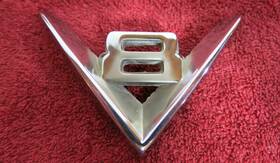
( Manufacturer Part Number: 1-RC-8259 ), ( Color: Chrome ), ( Material: Steel With Chrome ), ( Vintage Part: Yes ), ( Placement On Vehicle: Fender/trunk Lid/valance ), ( Suitable For: 1951 1952 1953 Ford Truck V-8 Engine ), ( Type: Fender Trunk Valance Emblem ), ( Attachment Type: Washer And Nut On The Threaded Studs ), ( Theme: V-8 Logo Badge ), ( Features: Vintage Original Collectible Easy Install Display Or Use ), ( Finish: Polished Chrome ), ( Country Of Origin: United States )
Review FORD Fomoco Truck V8 Emblem Badge Vintage Upper Valance Fender fits 1951–1953
The **1951 1953 Ford V8 Emblem Badge Upper Valance Fender Emblem** is a meticulously crafted, period-correct automotive accent that embodies the bold, iconic styling of Ford s legendary Y-block V8 era. This high-quality reproduction emblem, numbered **1-rc-8259**, captures the unmistakable elegance and mechanical prowess of the mid-century Ford lineup, featuring the signature **Ford V8 script badge** paired with a sleek, chrome-plated upper valance fender emblem. The design is rooted in the distinct aesthetic of the early 1950s, when Ford s engineering dominance and streamlined chrome detailing set the standard for American automotive craftsmanship. The emblem s polished chrome finish gleams under the light, reflecting the era s love for shiny, reflective surfaces that accentuated the car s powerful presence. Whether mounted on a classic Ford like the 1951 1953 Crown Victoria, Fairlane, or Mainline, this badge adds an authentic touch of vintage flair, evoking the confidence and prestige of Ford s golden age. The attention to detail from the precise script of the "Ford V8" logo to the clean, angular lines of the valance emblem ensures it fits seamlessly with original or restored vehicles, enhancing their historical accuracy and visual appeal. For enthusiasts and collectors, this emblem is more than an accessory; it s a nod to a time when American automobiles were synonymous with innovation, speed, and unparalleled design.
### **Pros and Cons of Buying a 1951 1953 Ford V8 Emblem/Badge Upper Valance Fender (1-RC-8259)**
#### **Pros**
1. **Classic Ford Design** The 1951 1953 Ford V8 models are iconic, featuring the distinctive "Flying V" emblem, chrome accents, and a timeless American look. These cars are highly sought after by collectors and enthusiasts, making them valuable in the classic car market.
2. **Strong Engine and Performance** The Y-block V8 engine (introduced in 1954 but carried over into early 1953 models) was a robust powerplant for its time, offering smooth operation and good reliability if maintained properly. Even the earlier 239-cid inline-six engines (1951 early 1953) were well-built for their era.
3. **Restoration Potential** Many of these cars were built in relatively high numbers (especially 1951 1952), meaning parts are more accessible than on rarer models. A well-documented project car with original or restored components can be a rewarding build.
4. **Nostalgia and Collectibility** Ford s early 1950s models hold strong appeal for vintage car enthusiasts. The 1951 1953 era marks the transition from utilitarian design to the more stylized, chrome-heavy look that defined Ford s mid-century identity.
5. **Potential for Customization** The body style is simple enough to modify while retaining authenticity. Swapping in a later V8 (like a 272 or 292) or upgrading suspension and brakes can improve modern drivability without losing classic charm.
6. **Lower Purchase Price (Compared to Later Models)** While not extremely rare, these cars are often priced lower than later Ford V8s (e.g., 1955 1957 Thunderbirds or Fairlanes), making them more accessible for buyers on a budget.
7. **Community and Events** Owning a 1951 1953 Ford means access to classic car clubs, shows, and cruises where these models are well-represented. The Ford V8 Owners Club and other vintage Ford groups actively support these cars.
---
#### **Cons**
1. **Age and Wear** These cars are over 70 years old, meaning rust, worn suspension, and outdated electrical systems are common issues. A thorough inspection is essential before purchase.
2. **Parts Availability** While parts are more accessible than on extremely rare models, some components (like original chrome trim, specific body panels, or vintage Ford parts) may require sourcing from specialty suppliers or restoration shops.
3. **Fuel and Emissions Challenges** Modern fuel standards mean carbureted engines may struggle with today s gasoline blends. Retrofitting emissions equipment (like EGR or catalytic converters) can be costly and may reduce performance.
4. **Driving Experience** Early 1950s Fords lack modern safety features (no ABS, minimal crash structure) and have stiff, less forgiving suspension. Driving one at highway speeds can be uncomfortable compared to modern cars.
5. **Restoration Costs** If the car is in poor condition, a full restoration can be expensive. Labor rates for classic car work are high, and sourcing period-correct materials adds to the cost.
6. **Depreciation Risk** While classic cars generally appreciate, some Ford models from this era (especially those with common issues like rust or engine problems) may not hold value as well as rarer or more desirable models.
7. **Insurance and Storage** Classic car insurance can be costly, and proper storage (indoor or climate-controlled) is often required to prevent further deterioration.
---
### **Conclusion**
Buying a 1951 1953 Ford V8 emblem/badge upper valance fender (1-RC-8259) is a great choice if you appreciate classic American automotive history, enjoy restoration projects, and want a car that stands out at shows. These models offer a balance of availability, collectibility, and driving character, though they require patience and maintenance to keep in good condition.
If you re looking for a **project car** with potential for appreciation and a strong following, this is an excellent investment. However, if you prefer a **ready-to-drive** classic with minimal hassle, you may want to consider a later model (e.g., 1955 1957) or a more restored example.
---
### **Recommendation**
- **Buy if:** You have experience with classic car restoration, enjoy the challenge of bringing a vintage Ford back to life, and want a car that holds sentimental or investment value.
- **Avoid if:** You need a reliable, modern-driving classic car with minimal upkeep or if you re unwilling to invest time and money into repairs and maintenance.
- **Best Approach:** Purchase from a reputable seller with a **detailed history** and **mechanical inspection**. Consider starting with a **restored or near-restored** example if you want to avoid major work. If you re new to classic cars, start with a simpler project (like a 1951 1952 Ford with fewer rust issues) before tackling a more complex build.
For the best experience, prioritize **originality where possible** (especially the emblem, badge, and valance fender) while ensuring the engine, transmission, and chassis are sound. With proper care, a 1951 1953 Ford V8 can be a rewarding and enjoyable addition to any collection.
Details:
A 1951 52 1953 Ford V-8 emblem in good as found used condition for your consideration. Both mounting studs are attached and look good, has one washer nut in place, no bends breaks or cracks, I see tiny hole on the bottom right side of v, photos. Chrome shines bright with no pitting, just minor imperfections.
part #: 1rc8259 prices
- $38.95-$51.95
specifications emblico:
- for makes: Ford
- for years: 1951-1953
- mpn: 1-rc-8259
- color: Chrome
- material: Steel With Chrome
- vintage part: Yes
- placement on vehicle: Fender/trunk Lid/valance
- suitable for: 1951 1952 1953 Ford Truck V-8 Engine
- type: Fender Trunk Valance Emblem
- attachment type: Washer And Nut On The Threaded Studs
- theme: V-8 Logo Badge
- features: Vintage Original Collectible Easy Install Display Or Use
- finish: Polished Chrome
- country of origin: United States
shipping emblico:
- carrier: USPS
- type: Fixed
- transit: 4-8 Days
- cost: $6.39
- service: USPS Ground Advantage
- class: Standard
offer emblico:
- sold: 0
- options: Ship-to-home
- quantity: 1
- availability: In Stock
- started: March 8, 2026
returns emblico:
- paid by: Buyer
- time: 30 Days
- policy: Returns Accepted
seller emblico:
- rating: 100.0%
- # reviews: 1040
- city: Hillsboro, Oregon
general emblico:
- condition: Used
- Car Truck Parts Accessories > Exterior Parts Accessories > Emblems Ornaments
payments emblico:
- wallet: Paypal
- other
- credit card: Visa
Ford 1-RC-8259 Is Similar To:
- 09zb-16098-a Ford Mustang Origional Emblem (27.9% similar) It is the original emblem. This emblem is from a 1972 ford mustang. I personally took it off the car. No gimmicks...(August 21st, 2018)
- 1-37b-16b114-ba Ford Ranger Xlt Fender Emblems Oem Pn (32.9% similar) Used condition, with one of the emblems missing two attachment posts see photos. 2 ford ranger XLT fender emblems - oem pn: 1-37B-16B114-BA. From a 1995 ford ranger...(July 15th, 2018)
- 10625 Rh Lh Ford Two Fairlane Side Fender Emblem Badge Oem (38.6% similar) Items shipped economy, media, or parcel post can take 2-6 weeks for delivery no reserve. You get exactly what is pictured. Item being sold as is...(June 8th, 2019)
- 1238 Ppi Powered By Ford Emblem Set Mustang Shelby Boss Mach (31.3% similar) 2-WAY 3m automotive tape is included making installation a 2 second proposition. Free domestic shipping on these emblems. They look great on fenders, deck lids, dashboards, etc. Buy more than one set...(June 19th, 2018)
- 18983 Fomoco Ford Truck Emblem Original Keeler Brass (48.9% similar) ...(December 5th, 2018)
- 196871471 Pt Hot Abs Plastic Rear Tailgate Emblem Inserts For Ford (30.1% similar) Please remove the protective film after installation. Not the cheap vinyl sticker package includes: 1 set inserts come with adhesive on its back. Never fade weather proof self adhesive material: abs plastic. Exactly as the pictures show...(September 14th, 2018)
- 196970frdltdrearinsrt Ford Ltd Rear Panel Emblem New Nice (31.9% similar) Unfortunately, it is a very delicate procedure getting the paper off without ripping or leaving half of on emblem. This was what some manufacturers used in the late 60S and early 70'S. Fits in the trim between taillights on passenger side. Has original laminated-paper like tape. A brand new, nos ...(June 2nd, 2018)
- 1973-1977 Ford Fender Emblem Genuine Oem Badge Sign Symbol Logo (38.7% similar) 1 used genuine oem emblem fits ford F250SOME wear, no damages...(March 15th, 2018)
- 1c3z-9942528-aa Ford Brand New Oem Super Duty Tailgate Emblem (28.4% similar) Then promptly. You bought wrong model or color. This will work on tailgate...(January 4th, 2019)
- 1l2z-7842528-ga Oem Ford Pair Explorer Xlt Emblem Name Plates (39.2% similar) New pair XLT black and chrome...(April 14th, 2018)
- 1l2z-7842528-ka Ford Expedition Explorer Taurus Eddie Bauer Emblem Nameplate Oem Badge (33.5% similar) There is a product inspection with third party upon receiving the item. Please ship the item back in its original package. If the item was damaged on return shipping due to poor packaging, is not accepted. Please match our part number with your original one...(January 30th, 2019)