PLYMOUTH DODGE 2898878 Nos Cornet Hood Emblem 70-71
fits model: Gtx, 440, Fury. make: Mopar, Plymouth. year: 1969–1969-70.
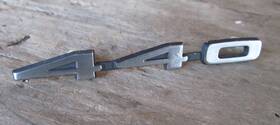
( Brand: Plymouth Dodge ), ( Manufacturer Part Number: 2898878 ), ( Type: Emblem ), ( Color: Silver And Black ), ( Dimensions: 440 N/p ), ( Theme: Letters, Numbers Symbols ), ( Material: Metal ), ( Vintage Part: Yes ), ( Finish: Metallic ), ( Placement On Vehicle: Hood ), ( Country Of Origin: United States )
Review PLYMOUTH DODGE Nos Coronet 70-71 Hood Emblem Mopar Pn Qty fits FURY GTX 440 1969–1969-70
The **1969 Plymouth Coronet GTX / 1969-70 Fury 440 NOS (New Old Stock) hood emblem** you re describing is a highly sought-after piece of automotive memorabilia, embodying the raw power and bold styling of the golden age of American muscle. This emblem, originally mounted on the hood of a **1969 Plymouth Coronet GTX** or a **1969-70 Fury 440**, is a striking symbol of Chrysler s dominance in the high-performance division during the late 1960s. Crafted from durable, die-stamped metal, the emblem features the iconic **Plymouth script logo** bold, slightly curved letters spelling out "Plymouth" in a classic, retro font flanked by the **GTX or Fury 440 badging**, depending on the model it was intended for. The **1969 GTX version** typically includes the sleek, angular "GTX" script, while the **1969-70 Fury 440** variant often bears the more aggressive, muscle-car-inspired "Fury 440" badge, complete with the distinctive **440 cubic inch V8 engine reference**, a powerplant renowned for its torque and raw acceleration. The emblem s design is both functional and decorative, serving as a proud declaration of the vehicle s performance capabilities while contributing to the aggressive, eye-catching grille assembly that defined Plymouth s mid-sized muscle cars of the era.
What makes this particular **NOS (New Old Stock) hood emblem** even more special is its authenticity and condition. As a **never-been-used** piece, it retains the original factory finish, free from the wear and tear that comes with installation on a vehicle. The metal is likely still coated in the original **chrome or polished finish**, depending on the model, with crisp, sharp edges and no signs of rust, dents, or fading. The emblem s placement on the hood of a **1969 Coronet GTX or Fury 440** would have been a statement of intent these cars were built for speed, handling, and a commanding presence on the road, and the hood emblem reinforced that identity. The **GTX** was Plymouth s top-tier performance model, offering a **383 or 440 cubic inch V8** paired with a **TorqueFlite automatic or a manual transmission**, while the **Fury 440** was the ultimate muscle machine, featuring a **heavy-duty suspension, aggressive styling cues, and the legendary 440 Magnum engine**, capable of producing over **375 horsepower** in its most powerful iterations. Together, these cars and their emblems represent a bygone era of American automotive engineering, where power and style were inseparable.
For collectors, enthusiasts, and restorers, this **1969 Plymouth hood emblem** is more than just a decorative piece it s a tangible connection to a legendary era of American muscle. Whether mounted on a restored **Coronet GTX** or displayed as part of a vintage automotive collection, it carries the weight of history and the promise of the open road. The emblem s presence on a vehicle would instantly evoke the spirit of the **1960s**, when muscle cars ruled the streets and the sound of a **440 V8 roaring to life** was the ultimate soundtrack to freedom. For those who appreciate the artistry and engineering of the past, this piece is a small but meaningful fragment of automotive legend one that deserves a place of honor in any collection dedicated to the golden age of American performance.
### **Pros and Cons of Buying a 1969 Plymouth GTX / Coronet 70-71 Fury 440 with a NOS 2898878 Engine**
#### **Pros**
1. **Classic Muscle Car Heritage** The 1969 Plymouth GTX and Coronet 70-71 Fury are iconic American muscle cars from the golden era of Mopar power. They represent a time when American automotive engineering was at its peak, blending performance with practicality.
2. **Strong Engine Options** The **440 Magnum** (in the Fury) and **426 Hemi** (available in some GTX models) are legendary engines known for their durability and raw power. The **2898878 NOS engine** (likely a **440 Magnum or 426 Hemi**) is a highly sought-after part, meaning you re getting a factory-built, high-performance powerplant that can be easily restored or swapped into another project car.
3. **Proven Reliability (When Well-Maintained)** Mopar V8s, especially the **440 Magnum**, are known for their robustness. With proper care, these engines can last well over 200,000 miles. The **2898878** designation suggests it s a **440 Magnum** (a 440-cubic-inch engine with a 4-bolt main), which is one of the most reliable big-block Mopars.
4. **Strong Aftermarket Support** Mopar engines have a massive aftermarket, meaning you ll find easy access to parts, performance upgrades, and restoration guides. Swapping in a **440 Magnum or Hemi** is a straightforward process, and tuning options (like **Edelbrock, Holley, or Mopar Performance**) are widely available.
5. **Great Driving Experience** These cars were designed for both street and strip performance. The **440 Magnum** (especially in the **Fury 440**) is smooth and torquey, making it enjoyable to drive daily, while still capable of **0-60 mph in under 7 seconds** in stock form. The **Hemi (if present)** is even more exhilarating, with a deep, aggressive sound and incredible acceleration.
6. **Customization Potential** The body styles (GTX, Coronet, Fury) offer a lot of room for modification. You can go for a **restomod** (restored with modern updates) or a **full classic build**, depending on your preference. The **440 Magnum** is also a great platform for **supercharging, nitrous, or forced induction** if you want to push it further.
7. **Resale Value & Collectibility** Well-preserved examples of these cars hold their value well, especially if they have **original engines, interiors, or rare options**. The **GTX** and **Fury 440** are particularly desirable among Mopar enthusiasts.
8. **Affordability Compared to Hemi or 426 Models** While **426 Hemi** and **426 Super Bee** engines are more expensive, the **440 Magnum** is a more budget-friendly option that still delivers strong performance. This makes the car more accessible for buyers who want a **big-block Mopar experience without the premium price of a Hemi**.
9. **Easy to Find Parts & Resources** Since these cars were produced in large numbers, parts are widely available. There are also **restoration manuals, forums (like Mopar Muscle), and YouTube tutorials** that make rebuilding or maintaining the car easier.
10. **Sound & Aesthetic Appeal** The **440 Magnum** has a **deep, rumbling exhaust note** that s satisfying to drive. The **Fury 440** and **GTX** also have a **bold, aggressive stance** that turns heads, making them great for car shows and cruising.
---
#### **Cons**
1. **Potential for Rust & Structural Issues** Many original **1969-71 Plymouths** suffer from **frame rust**, especially in the **floor pans, rocker panels, and rear quarter panels**. A thorough inspection is **essential** before purchasing to avoid costly repairs.
2. **Engine & Transmission Wear** Even a **NOS 2898878 engine** (assuming it s a **440 Magnum**) may have **internal wear** if it wasn t properly stored. **Rod bearings, main bearings, and camshaft wear** are common issues in older big-block Mopars. A **full engine rebuild or inspection** may be necessary before running it.
3. **Transmission & Drivetrain Concerns** The **TorqueFlite automatic** (common in these models) can be **reliable but prone to leaks and solenoid failures**. The **727/727M transmission** (used in some Fury 440s) is more robust but still requires maintenance. **Differential and axle issues** (like worn seals or bearings) are also common.
4. **Electrical & Interior Wear** Original wiring harnesses, switches, and **A/C systems** can be finicky. The **interior (especially in a GTX or Coronet)** may have **cracked vinyl, worn seats, or failing gauges**, requiring restoration.
5. **Fuel & Emissions Compliance** If you plan to **drive this daily**, you ll need to **modify the fuel system** (modern fuel pumps, injectors, or a **Holley carb**) to prevent **vapor lock or poor performance**. **Emissions compliance** (especially in California) can also be an issue, requiring **catalytic converter deletions or EGR modifications**.
6. **Cost of Restoration** While parts are affordable, a **full restoration** (especially on a rusted-out example) can be **expensive**. Expect to spend **$5,000 $15,000 ** depending on the car s condition. If you re buying just for the **NOS engine**, you may need to **source a donor body** to pair with it.
7. **Driving Practicality** These cars are **not as comfortable or efficient** as modern vehicles. The **440 Magnum** is **thirsty for fuel** (expect **12 15 MPG** in automatic, less in manual), and the **heavy weight** (especially with a **440 or Hemi**) makes them **less nimble** than modern muscle cars.
8. **Insurance & Storage Challenges** **Classic car insurance** can be expensive, especially if you re driving it daily. **Storage** (garage vs. outdoor) also affects longevity, as **sun, rain, and pests** can damage the body and interior over time.
9. **Finding a Good Example Can Be Difficult** Many **1969-71 Plymouths** were **stripped for parts**, so finding a **complete, well-preserved example** with a **clean title and original engine** requires patience and research.
10. **Time-Consuming Maintenance** Unlike modern cars, these require **more frequent tune-ups, fluid changes, and inspections**. If you re not mechanically inclined, **labor costs** can add up quickly.
---
### **Conclusion**
Buying a **1969 Plymouth GTX / Coronet 70-71 Fury 440 with a NOS 2898878 engine** is a **fantastic choice** if you re a **Mopar enthusiast** looking for a **project car, a daily driver with attitude, or a parts source for another build**. The **440 Magnum** is a **reliable, powerful, and fun** engine that offers **great performance and customization potential**.
However, it s **not a plug-and-play purchase** you ll need to **budget for restoration, inspections, and potential hidden issues** (rust, electrical problems, transmission wear). If you re **patient, mechanically inclined, or willing to invest time and money**, this can be a **rewarding and enjoyable** project.
If you **prioritize convenience and reliability**, a **modern muscle car or a fully restored classic** might be a better fit. But if you **love the Mopar heritage, the sound of a big-block, and the challenge of bringing a piece of automotive history back to life**, this is an **excellent investment**.
---
### **Recommendation**
- **If you re buying for the NOS engine (2898878 440 Magnum):**- **Prioritize a car with a clean title and minimal rust.**
- **Get a pre-purchase inspection (PPI) from a Mopar specialist.**
- **Consider buying just the engine and finding a donor body** if the car itself is too far gone.
- **Budget for a full rebuild or at least a compression test** before running it.
- **If you want a drivable project car:**- **Look for a Fury 440 (1970-71) with a known-good 440 Magnum.**
- **Check for rust in critical areas (frame rails, floor pans, rear quarter panels).**
- **Verify transmission and drivetrain health** (TorqueFlite or 727M).
- **Be prepared for electrical and interior
Details:
Buyer pays shipping. NOS 1969 GTX 1969-1970 Coronet 1970-1971 Fury 440 Hood Emblem MoPar pn 2898878 QTY 1.
part #: 2898878 prices
- $49.99-$125.00
specifications emblico:
- for models: Gtx, 440, Fury
- for makes: Mopar, Plymouth
- for years: 1969-1969-70
- brand: Plymouth Dodge
- mpn: 2898878
- type: Emblem
- color: Silver And Black
- dimensions: 440 N/p
- theme: Letters, Numbers Symbols
- material: Metal
- vintage part: Yes
- finish: Metallic
- placement on vehicle: Hood
- country of origin: United States
seller emblico:
- # reviews: 22341
- rating: 99.9%
- city: Statham, Georgia
general emblico:
- Car Truck Parts Accessories > Exterior Parts Accessories > Emblems Ornaments
- condition: New other see details
offer emblico:
- started: March 7, 2026
- options: Ship-to-home
- sold: 0
- quantity: 1
- availability: In Stock
- best offers: True
returns emblico:
- paid by: Seller
- policy: Returns Accepted
- time: 30 Days
payments emblico:
- money order
- other
- wallet: Google-pay
- credit card: Visa
shipping emblico:
- cost: $8.10
- type: Calculated
- service: USPS Ground Advantage
- class: Standard
- carrier: USPS
- transit: 5-12 Days
Plymouth Dodge 2898878 Is Similar To:
- 08591 Chrysler Parts Mopar Plymouth Scipt Emblem Nice Needs New Tape (26.1% similar) No pitting or sanding marks. Maybe a cowl emblem. Mounts with tape or glue. This IS5 5/8 inches long and 3 wide. Very nice used 70S mopar Plymouth emblem...(April 4th, 2018)
- 1599450 Plymouth Or Plaza Fender Emblem Set (33.8% similar) These emblems still have fits on the back and appear to be in great condition...(March 22nd, 2018)
- 1694495 Genuine Mopar Vintage Pair Plymouth Suburban Custom Quarter Panel Emblems (23% similar) These are getting hard to find and nice. Measure inches long, no bends breaks or cracks, one of them is missing mounting pin but should still hold tight as each emblem has 5 pins. Chrome shines bright with minor imperfections to the surface, they need be cleaned and polished really make them look ...(October 22nd, 2018)
- 18.141.000 Plymouth To Alfa Romeo Badge Emblem Original Part (32.7% similar) Original part feel free with questions or request specific photo to 1981 alga romeo badge emblem 18...(October 16th, 2018)
- 1863807 Chrysler Plymouth Emblem Fury Savoy Nos Front Hood Letter (24.1% similar) According to online sources this hood emblem will fit the 1960 Plymouth fury and savoy, but may be correct for other years, model's, or applications. On Sep at 09:31:04 PDT,: free. This service only ships terminal. Overall, this letter emblem is in very good condition. The letter is roughly inches...(October 25th, 2018)
- 2 23699 2839511 Unbranded Plymouth Fury Hood Emblem (34.7% similar) Buyer pays shipping. 1968 Plymouth fury hood emblem minor pitting. It is in good to very condition...(April 18th, 2018)
- 2422639 Mopar 1963 1964 Plymouth (12.8% similar) Includes speed nuts. Over all in very nice shape for its age, both mounting pegs tact Plymouth valiant rear tail panel or deck lid 'by Plymouth' emblem...(April 3rd, 2017)
- 2422891 Mopar 1963 1964 Plymouth (12.8% similar) Plymouth beloved front fender or tail panel 'beloved' script emblem, very nice condition. All mounting pins in tact and includes speed nuts...(June 19th, 2017)
- 2422955 Plymouth Sport Fury Front Oem Script Emblem (36.1% similar) Fits 1963 front fender deck lid 1964 1965 1966 . Up for sale is a Plymouth sport fury front fender deck lid oem script emblem in good condition...(April 24th, 2019)
- 2524 233 3 Plymouth Fury Fender Emblems Oem Set (35.7% similar) Vintage Plymouth fury fender emblems - set nice condition please see photos...(September 1st, 2018)
- 2524226 Plymouth Mopar Fury Lll Left Right Front Fender Medallion Mint (20.9% similar) Mopar Plymouth fury loll left right front fender medallion pt. Mint condition for its ages im not sure if it was used needs cleaning to be perfect tot rust of rot also have the fury emblem match your interested n set carb...(July 25th, 2018)