OER 338239 Grill Emblem INZ28
fits model: Camaro. year: 1970-73.
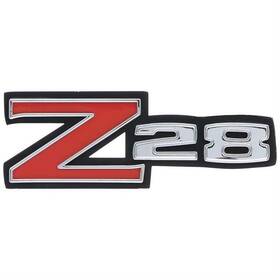
( Brand: Oer ), ( Manufacturer Part Number: 338239 ), ( Type: Exterior Body Emblems ), ( Dimensions: 7.0 X 4.0 X 3.0 ), ( California Prop 65 Warning: False )
Review OER In Grill Emblem fits CAMARO 1970-73
The **OEM 338239 1970 1973 Chevrolet Camaro SS/RS Intrepid Z28 Grill Emblem** is a meticulously crafted, high-quality reproduction part designed to restore the iconic front-end character of one of the most legendary muscle cars ever produced. This emblem, a hallmark of the aggressive and performance-oriented Z28 and SS/RS models, features a bold, chrome-plated design with the word **"INTREPID"** boldly inscribed in a sleek, angular font, flanked by the iconic Chevrolet bowtie logo at its center. The emblem is crafted from durable, die-stamped metal, ensuring a sturdy and authentic appearance that matches the precision engineering of the original. Perfectly sized to fit the 1970 through 1973 Camaro s distinctive grille, this emblem not only enhances the car s visual appeal but also pays homage to the fearless spirit of the Z28, which dominated drag strips and road courses alike during its heyday. Whether restoring a classic Camaro to its former glory or upgrading a modern build, this emblem is a must-have for enthusiasts seeking both authenticity and show-stopping presence. Its polished finish and precise fitment make it an ideal choice for those who demand nothing less than perfection in their restoration or customization projects.
### **Pros and Cons of Buying a 1970-1973 Chevrolet Camaro SS/RS (L30/L34/L72/L78) with an INZ28 Grill Emblem**
#### **Pros**
1. **Iconic Design and Heritage**
The 1970-1973 Camaro, particularly the SS/RS models, represents one of the most legendary muscle car eras. The aggressive, angular styling especially with the distinctive INZ28 (or Z28) grille emblem makes it instantly recognizable and highly desirable among enthusiasts. Owning one allows you to drive a piece of automotive history that was both competitive and culturally significant.
2. **Strong Performance Potential**
- **L30 (SS 350):** A solid base engine (350 CID, 255-275 hp) that s reliable if maintained. It s a good starter engine for someone learning about muscle cars.
- **L34 (SS 396):** A more powerful option ( 300-320 hp), offering better acceleration and a more engaging drive. The 396 is a classic muscle engine with a reputation for durability if properly cared for.
- **L72 (Z28 302):** The most sought-after engine ( 275-300 hp) due to its high-revving, high-performance nature. It s a favorite for street and track use, though it requires more attention to maintenance (valve springs, ignition, etc.).
- **L78 (SS 454):** The brute-force option ( 375-450 hp) for those who want raw power. While less common in the early '70s, it s a fantastic engine for those who prioritize brute strength over efficiency.
All of these engines can be restored to peak condition, and parts are widely available, making them great for enthusiasts who enjoy working on their cars.
3. **Driving Experience**
The Camaro s lightweight body (for its size), strong engines, and manual transmission options (especially the M22 4-speed) provide a thrilling, engaging drive. The SS/RS models feel more sporty and responsive than the base models, with better handling and braking (especially with aftermarket upgrades).
4. **Community and Enthusiast Appeal**
The Camaro community is passionate and well-organized, with clubs (like the **Chevrolet Camaro Club of America**), forums (e.g., **CamaroForums, MuscleCarForum**), and events (like **Muscle Car Shows, SEMA, and regional meets**) where owners gather. This makes it easier to find parts, advice, and camaraderie.
5. **Customization and Modification Potential**
The Camaro s platform is highly modifiable. You can upgrade suspension (coilovers, sway bars), exhaust (headers, mufflers), intake (Holley, Edelbrock), and even swap in modern performance parts (turbocharging, supercharging, or even modern engines like the **LS-based LT1/LS3**). The INZ28 grille emblem also makes it a great candidate for a "restomoderate" look, blending classic styling with modern performance.
6. **Resale Value (For Well-Maintained Examples)**
While not as high as a modern muscle car or a rare classic (like a '67-69 Camaro), a **well-documented, restored, or restored-to-original SS/RS with an INZ28 grille** can still hold value, especially if it s in good condition. The Z28 (especially L72-powered) models tend to appreciate more over time.
7. **Affordability (Compared to Later Models)**
While prices have risen, a **1970-1973 Camaro SS/RS** is still more affordable than a **1969-1970 Z28, a 1978-1981 Camaro (IROC), or a 1993-2002 Camaro (Z28)**. You can often find one in the **$10,000 $30,000 range** depending on condition, making it accessible for serious enthusiasts.
---
#### **Cons**
1. **Rust and Structural Issues**
The 1970-1973 Camaro was built with **less rust-resistant materials** than later models. Common rust hotspots include:- **Floor pans** (especially around the firewall and rear quarter panels)
- **Rocker panels** (from road debris)
- **Wheel wells** (from salt and water)
- **Hood and trunk** (less common but still an issue)
A thorough inspection is **mandatory** many "restored" examples have been patched up with poor-quality welds or fiberglass. A **full rust repair** can be expensive ($3,000 $10,000 depending on severity).
2. **Engine and Drivetrain Wear**
- **Original engines** (especially the L30 and L34) may have **worn bearings, rods, or pistons** if not maintained. The L72 and L78 are more durable but still benefit from **valve spring replacement, ignition upgrades, and timing chain inspection**.
- **Transmissions** (especially the **M20 3-speed and M21 4-speed**) can be finicky. The **M22 4-speed** is more reliable but still requires attention to synchros and bearings.
- **Differential wear** is common check for **gear wear, seal leaks, and proper lubrication**.
3. **Electrical and Interior Wear**
- **Original wiring** can be unreliable, leading to **intermittent issues** (starter, lights, gauges).
- **Interiors** (especially in later '70s models) suffer from **cracked vinyl, worn seats, and failing climate control systems**.
- **Brakes** (especially drums) may need **resurfacing or replacement**, and **rotors** can warp over time.
4. **Fuel and Emissions Compliance**
- **Carbureted engines** (especially the L30/L34) can be **difficult to run on modern fuel** (higher octane, ethanol blends). Some owners switch to **EFI (Electronic Fuel Injection)** for better reliability.
- **Emissions compliance** is a growing issue. Many states require **smog checks**, and older cars may need **modifications (catalytic converters, PCV systems)** to pass. Some owners opt for **restoration to original spec** (with carburetors) or **modern EFI conversions**.
5. **Maintenance and Parts Availability**
- While parts are **widely available**, some **rare or aftermarket components** (like **original Holley carburetors, specific gauges, or rare body panels**) can be expensive.
- **Labor costs** for classic cars can be high, especially if you take it to a **specialty shop** rather than a modern auto repair facility.
6. **Driving Practicality**
- **Fuel economy** is terrible by modern standards (** 10-12 MPG** for the SS/RS).
- **Comfort** is limited **soft suspension, noisy cabin, and poor heating/AC** in many examples.
- **Storage and transport** can be difficult many owners keep them in **garages or trailers** due to size and value.
7. **Potential for Over-Restoration**
- Some owners go overboard with **modern parts (turbochargers, superchargers, LED lights, etc.)**, which can **devalue the car** if it s meant to be a **period-correct example**.
- **Originality vs. restoration** is a fine line some buyers prefer **fully restored examples**, while others want **drivers** (project cars). Misalignment in expectations can lead to disappointment.
8. **Legal and Insurance Challenges**
- **Classic car insurance** can be expensive if the car is **high-value or modified**.
- **Registration and title issues** can arise, especially with **salvage titles, rebuilt titles, or cars with missing documentation**.
- **Street legality** may require **modifications** (headlights, turn signals, emissions) to comply with modern laws.
---
### **Conclusion**
Buying a **1970-1973 Chevrolet Camaro SS/RS with an INZ28 grille emblem** is a **fantastic choice for the right owner** someone who:- **Enjoys working on cars** (or has access to a mechanic who does).
- **Values classic muscle car heritage** and doesn t mind the trade-offs for driving experience.
- **Has a budget for potential rust repairs, engine maintenance, and restoration**.
- **Wants a car that s fun to drive** rather than a daily commuter.
However, it s **not the best choice** for someone who:- **Wants a low-maintenance, modern-compliant vehicle**.
- **Can t afford unexpected repairs** (rust, engine issues, electrical problems).
- **Prioritizes fuel efficiency, comfort, or practicality** over raw power and nostalgia.
- **Isn t willing to put in time or money** into bringing the car to a **drivable or show-quality condition**.
---
### **Recommendation**
If you re **
Details:
Part # 338239 Condition New Brand OER Sold Each Details This is an reproduction of the original Z28 front grille emblem originally installed on all 1970-73 Camaro model's. Each emblem is manufactured in zinc die-cast material including correct color paint maliciously masked with chrome accents as original. Each emblem includes proper mounting hardware. Officially Licensed GM Restoration Part.
Headquarters. Includes backing plate and speed nuts for proper installation. Note: The emblem back plate retainer may need adjusting on later 2nd design versions.
part #: 338239 prices
- $37.99-$50.17
specifications emblico:
- for models: Camaro
- for years: 1970-73
- brand: Oer
- mpn: 338239
- type: Exterior Body Emblems
- dimensions: 7.0 X 4.0 X 3.0
- california prop 65 warning: False
general emblico:
- condition: New
- Car Truck Parts Accessories > Exterior Parts Accessories > Emblems Ornaments
returns emblico:
- paid by: Seller
- policy: Returns Accepted
- time: 30 Days
payments emblico:
- other
- wallet: Google-pay
- credit card: Diners-club
offer emblico:
- started: May 18, 2026
- availability: In Stock
- options: Ship-to-home
- sold: 0
shipping emblico:
- carrier: UPS
- class: Standard
- service: UPS Ground
- transit: 3-9 Days
- type: Fixed
- cost: $15.99
seller emblico:
- city: Huntington Beach, California
- rating: 99.8%
- # reviews: 365370
Oer 338239 Is Similar To:
- 14008432 Oer Camaro Shield Horn Cap Emblem (47.2% similar) Each Oer part is manufactured to original specifications, down the smallest detail. Manufactured to factory specifications and features a black camaro shield badge over orange background. Reproduction steering wheel horn cap emblem. Reproduction steering wheel horn cap emblem. Each product is ...(May 1st, 2019)
- 14012632 Oer For Chevy Camaro Hub Cap Insert Emblem (49% similar) Manufactured from injection molded plastic, this hub cap insert features the correct colored rings and camaro as original. Oer consistent quality control methods ensure an exact duplicate every time. Reproduction of the hub cap insert designed. Each Oer part is manufactured to original ...(August 21st, 2018)
- 14023358 Oer For Chevy Camaro Hub Cap Insert Emblem (49% similar) Each product is designed and manufactured to duplicate the original part as closely possible. Camaro hub cap insert emblem by Oer. Reproduction of the hub cap insert designed. Quality adhesive backing for easy installation DOA. Manufactured from injection molded plastic, this hub cap insert features...(August 21st, 2018)
- 14024332 Oer Silver Grille Emblem (45% similar) Each Oer part is manufactured to original specifications, down the smallest detail. This emblem features a silver Teri-color fade. Precision injection molded in abs plastic with a clear lens insert and features correct , dimensions Teri-color fade from dark to light. Most Oer products are officially...(April 5th, 2019)
- 14024334 Oer Blue Grille Emblem (43.6% similar) Each Oer part is manufactured to original specifications, down the smallest detail. Reproduction grill emblem. This emblem features a blue Teri-color fade. Precision injection molded in abs plastic with a clear lens insert and features correct , dimensions Teri-color fade from dark to light. Most ...(April 24th, 2019)
- 14024336 Oer Gold Grille Emblem (46.2% similar) Precision injection molded in abs plastic with a clear lens insert and features correct , dimensions Teri-color fade from dark to light. Reproduction grill emblem. Our consistent quality control methods ensure an exact duplicate every time. Each product is designed and manufactured to duplicate the ...(May 16th, 2019)
- 14024338 Oer Orange Grille Emblem (47.5% similar) Each Oer part is manufactured to original specifications, down the smallest detail. Most Oer products are officially licensed as authentic restoration. This emblem features an orange Teri-color fade. Z28 orange grille emblem by Oer. Each product is designed and manufactured to duplicate the original...(April 24th, 2019)
- 14083662 Oer Emblem Rear Silver With Bowtie Chevy Ea (20.2% similar) Fitment information may not be available for all products and those without will have a compatibility link. Emblem attachment stock finish silver logo z 28 with Bowie quantity sold individually. Buyer pays return shipping...(August 17th, 2018)
- 14083663 Oer Bowtie Gray Rear Panel Emblem (36% similar) Each product is designed and manufactured to duplicate the original part as closely possible. Our consistent quality control methods ensure an exact duplicate every time. Reproduction of the original rear panel emblem. Each Oer part is manufactured to original specifications, down the smallest ...(May 17th, 2019)
- 20014406 Oer Chevy Concours Trunk Lid Emblem (37.4% similar) Chevrolet concourse trunk lid emblem by Oer. Each product is designed and manufactured to duplicate the original part as closely possible. This emblem comes complete with two 3/1 6 speed nuts for mounting. Our consistent quality control methods ensure an exact duplicate every time. Most Oer products...(April 6th, 2019)
- 2786590 Oer Fish Passenger Side Fender Emblem (26.1% similar) Our consistent quality control methods ensure an exact duplicate every time. Most Oer products are officially licensed as authentic restoration. Each product is designed and manufactured to duplicate the original part as closely possible. V8 with fish, passenger side fender emblem by Oer. ...(April 25th, 2019)