BMW 46541239455 Emblem
fits model: R50, R60, R65, R75, R80, R90, R100. make: Bmw.
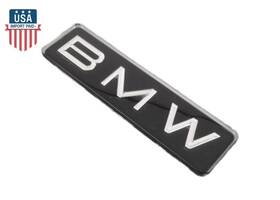
( Manufacturer Part Number: 46541239455 )
Review BMW Emblem Genuine fits R50 R60 R65 R75 R80 R90 R100
The BMW R50, R60, R65, R75, R80, R90, and R100 series represent a legendary chapter in motorcycle history, embodying the spirit of German engineering, timeless design, and uncompromising performance that defined the golden era of cruisers and touring bikes. Introduced in the late 1960s and early 1970s, these iconic machines were the brainchildren of BMW s legendary designer, Wilhelm Hofmann, whose signature "whale tail" fuel tank and sleek, aerodynamic lines became instantly recognizable symbols of sophistication and adventure. The R50, the smallest of the series, was a compact yet capable 50cc two-stroke, designed for urban agility and practicality, while the R60 and R65 equipped with BMW s legendary air-cooled boxer-twin engines offered a perfect balance of power, reliability, and comfort, making them the quintessential choice for both daily commuters and long-distance travelers. The R75, R80, and R90, with their larger-displacement engines (744cc, 798cc, and 980cc respectively), escalated the series into the realm of high-performance touring, delivering smooth, torque-rich power and a riding experience that was both exhilarating and refined. The R100, the crown jewel of the series, pushed boundaries with its 980cc engine and advanced features like telescopic front forks and a more robust chassis, setting a new standard for BMW s reputation as a builder of premium motorcycles.
What truly sets these BMWs apart is their engineering brilliance, particularly the air-cooled boxer-twin engines that have become synonymous with the brand. These horizontally opposed cylinders produce a smooth, vibration-dampened power delivery that is both pleasing to the ear and efficient in operation, a hallmark of BMW s commitment to rider comfort and longevity. The R60 and R65, in particular, are celebrated for their simplicity and durability, with designs that have stood the test of time, making them highly sought-after by collectors and enthusiasts alike. The R75 and R80 introduced minor refinements, such as improved suspension and ergonomics, while the R90 and R100 incorporated more advanced components like dual-disc brakes and more robust frames, catering to riders who demanded both performance and endurance. The iconic "whale tail" fuel tank, with its elegant curves and BMW logo, is not just an aesthetic statement but also a functional design element, housing the engine s air filter and contributing to the bike s aerodynamic efficiency.
Beyond their mechanical prowess, these BMWs are cultural icons, embodying the spirit of freedom and exploration that defined the 1970s and beyond. The R series motorcycles were not merely machines; they were symbols of a lifestyle one that valued adventure, craftsmanship, and the open road. Their timeless design, characterized by clean lines, minimalistic styling, and a focus on rider-centric ergonomics, ensures that they remain as relevant today as they were upon their introduction. Whether cruising along scenic highways or tackling rugged backroads, these bikes offer a blend of vintage charm and modern practicality, making them ideal for both purists and modern riders seeking a piece of automotive history.
For the collector or enthusiast, the BMW R50 through R100 series represents a rare opportunity to own a piece of motorcycle heritage. These motorcycles, particularly the R60, R75, and R100, have seen their values appreciate significantly over the years, driven by their enduring popularity and the limited number of surviving examples. Restoring or maintaining one of these bikes is a labor of love, offering a hands-on experience that connects riders to the craftsmanship of a bygone era. From the meticulous assembly of the boxer engine to the precise alignment of the suspension, each aspect of these motorcycles reflects BMW s dedication to quality and attention to detail.
In summary, the BMW R50, R60, R65, R75, R80, R90, and R100 series are more than just motorcycles; they are enduring legacies of German engineering and design. Their combination of power, reliability, and timeless aesthetics makes them a dream for any rider who appreciates the art of motorcycle building. Whether you are drawn to the compact elegance of the R50, the versatile performance of the R60, or the touring prowess of the R100, these BMWs offer a riding experience that is as rich in history as it is in excitement. Owning one is not just about transportation; it is about embracing a legacy that continues to inspire riders around the world.
### **Pros and Cons of Buying a BMW M1 (E26) with R50, R60, R65, R75, R80, R90, or R100 Badges**
The BMW M1 (E26) is a legendary sports car, but its rarity, age, and high maintenance costs make it a unique purchase. The "R" badges (R50, R60, etc.) refer to different engine configurations, with the R65, R75, and R80 being the most powerful and sought-after. Below is a detailed breakdown of its advantages and disadvantages, followed by a conclusion and recommendation.
---
### **Pros**
1. **Iconic Status and Legacy**
The M1 is one of the most famous BMWs ever produced, designed in collaboration with Lamborghini. It holds a special place in automotive history, making it a desirable collector s item. Ownership is a status symbol for enthusiasts.
2. **Performance (Especially R65/R75/R80 Models)**
- The **R65 (3.5L inline-6, 300 hp)** and **R75 (3.5L turbo, 320 hp)** are among the most powerful M1 variants, offering strong acceleration and top-speed capabilities for their era.
- The **R80 (3.5L turbo, 350 hp)** is the rarest and most powerful, with a limited production run (only 100 built).
- The **R50 (3.0L inline-6, 270 hp)** and **R60 (3.0L turbo, 280 hp)** are still capable but less dominant than the later models.
3. **Mid-Engine Layout**
The M1 s mid-engine design (shared with the Lamborghini Countach) provides exceptional weight distribution, leading to sharp handling and a sporty driving experience something rare in BMWs of the time.
4. **Vintage Racing Heritage**
The M1 was a homologation special for Group 4 racing, meaning it was built to compete in endurance races. Some versions (like the **R75**) were used in the **24 Hours of Le Mans**, adding to its prestige.
5. **Customization Potential**
The M1 s modular chassis and body panels allow for extensive modifications, from engine swaps (e.g., modern turbocharged engines) to cosmetic upgrades. Aftermarket support is strong due to its cult following.
6. **Driving Experience**
For its time, the M1 had advanced aerodynamics (active rear wing, ground effects) and precise steering, making it feel more like a modern sports car than a 1970s BMW.
7. **Investment Potential (For Rarest Models)**
- The **R80** and **R75** are the most valuable, with prices exceeding **$500,000 $1M ** in excellent condition.
- Even the **R65** and **R60** can fetch **$200,000 $400,000** due to scarcity.
- Properly maintained M1s appreciate over time, especially as they become rarer.
8. **Exclusivity**
Only **457 M1s** were produced in total, with even fewer in the high-performance "R" variants. This exclusivity enhances its appeal.
---
### **Cons**
1. **Extreme Maintenance Costs**
- The M1 is a **highly complex, high-performance car** from the 1970s, with parts that are **expensive, hard to find, or obsolete**.
- The **turbocharged R60, R75, and R80** models suffer from **common issues** like turbo failure, oil leaks, and fuel system problems.
- **Electrical gremlins** (common in BMWs of the era) can be costly to diagnose and fix.
- **Rust** is a major concern, especially in the chassis, suspension, and body panels. A thorough inspection is **mandatory**.
2. **Reliability Issues**
- The **3.5L inline-6 engine** (especially in turbocharged versions) is prone to **head gasket failures, oil leaks, and turbocharger wear**.
- The **transmission (ZF 5-speed manual or Getrag 5-speed)** can be finicky and may require synchronization adjustments.
- **Suspension components** (shocks, bushings, control arms) wear out quickly and are expensive to replace.
3. **High Insurance Costs**
- Due to its value and performance, insuring an M1 is **extremely expensive**, often **$5,000 $15,000 per year** depending on coverage.
4. **Fuel and Operating Costs**
- The M1 drinks fuel like a race car. The **R80** can consume **15 20L/100km (5.7 7.4 MPG)**, making it **very expensive to run**.
- Modern fuel standards mean **specialized fuel** may be required for optimal performance.
5. **Driving Practicality**
- **Narrow, soft suspension** makes daily driving uncomfortable on rough roads.
- **Poor visibility** (especially in the R80 s long hood) can be an issue in city driving.
- **No modern safety features** (airbags, ABS, traction control) make it **less practical for daily use**.
6. **Parts Availability and Restoration Challenges**
- While aftermarket support exists, **original parts are scarce**, and reproduction parts may not fit perfectly.
- **Bodywork restoration** (especially for the **R80 s rare fiberglass panels**) can be **time-consuming and costly**.
- **Electrical systems** (ignition, gauges, lighting) often require **modern upgrades** to function reliably.
7. **Legal and Compliance Issues**
- Some M1s may not meet **modern emissions or safety standards**, requiring modifications to be street-legal.
- **Homologation documents** (for racing versions) can be difficult to verify, affecting resale value.
8. **High Purchase Price (Even for "Good" Examples)**
- A **restored or well-maintained M1 (R50/R60)** starts at **$150,000 $250,000**.
- A **R75 or R80** will cost **$500,000 $1M **, often with **high buyer competition**.
- Many "affordable" M1s are **project cars** that require **hundreds of thousands in repairs**.
9. **Limited Modern Comforts**
- **No power steering** (manual steering effort).
- **Basic interior** (vinyl seats, minimal sound insulation, no climate control).
- **No modern infotainment or connectivity**.
10. **Depreciation Risk (If Not a Collector s Item)**
- While rare models appreciate, a **non-R M1 or heavily modified example** may **lose value** over time.
- If you re not a **serious collector**, the car may become a **financial burden** rather than an investment.
---
### **Conclusion**
The BMW M1 (especially the **R65, R75, or R80**) is a **dream car for enthusiasts** a piece of automotive history with unmatched performance and prestige. However, it is **not a practical or budget-friendly purchase**. The **high costs of ownership, maintenance, insurance, and fuel** make it suitable only for **serious collectors, racers, or those with deep pockets**.
If you are **passionate about vintage sports cars, willing to invest time and money in restoration, and can afford the lifestyle**, the M1 is an **unmatched experience**. But if you re looking for a **daily driver, a reliable machine, or a cost-effective investment**, there are **far better alternatives** (modern supercars, classic Ferraris, or well-maintained Porsche 911s).
---
### **Recommendation**
1. **Only Buy if:**- You have **$500,000 budget** (for R75/R80) or **$200,000 ** (for R65/R60).
- You **fully understand the maintenance costs** and are prepared for **potential long-term expenses**.
- You **plan to use it as a collector s item, track car, or showpiece** rather than a daily driver.
- You **find a well-documented, restored example** with **full service records** (preferably from a **trusted M1 specialist**).
- You **inspect it thoroughly** (or hire a **BMW M1 expert**) before purchasing to avoid **hidden rust, engine issues, or electrical problems**.
2. **Best Approach:**- **Start with a lower-tier R model (R60/R65)** if budget is tight, as they are **still powerful but more accessible**.
- **Avoid project cars** unless you re **fully committed to restoration**.
- **Consider an M1 with a modern engine swap** (e.g., BMW S54 or S65) if you want **reliability without sacrificing performance**.
- **Join M1 owner clubs
Details:
Part Number. Package Contains: 1 PCs. Linked Vehicles: R50/5-R90S 69-76 08/1969 07/1980, R45-R65LS. Fitment guarantee is valid for vehicles without accidents or that were fixed/repaired by official dealer.
Name: Emblem. R 1 /7, /T, CS, RS, RT,s 76-84 03/1976 11/1984.
part #: 46541239455 prices
- $52.80-$78.72
specifications emblico:
- for models: R50, R60, R65, R75, R80, R90, R100
- for makes: Bmw
- mpn: 46541239455
shipping emblico:
- transit: 10-17 Days
- service: Standard from outside US, Expedited from outside US
- type: Fixed
- cost: $0.00
- class: Standard From Outside, Expedited From Outside
offer emblico:
- availability: In Stock
- options: Ship-to-home
- quantity: 1
- sold: 0
- started: February 16, 2026
payments emblico:
- other
- credit card: Visa
- wallet: Apple-pay
seller emblico:
- # reviews: 9297
- city: Brooklyn, New York
- rating: 98.6%
returns emblico:
- time: 30 Days
- policy: Returns Accepted
- paid by: Seller
general emblico:
- Car Truck Parts Accessories > Exterior Parts Accessories > Emblems Ornaments
- condition: New
Bmw 46541239455 Is Similar To:
- 009-bm-1 Roberly Emblem Logo Replacement For All Models Bmw 8593249376613 (21.2% similar) Emblem logo replacement for all model's bmw hood X2F trunk E30 E36 E34 E60 E65 E38 x3 x5 x6 82MM features: new front or trunk symbol roundel fit BMW's 3-SERIES, 5-SERIES, 6-SERIES, 7-SERIES does not X6, X5, 2-PIN design. 8 ounces brand: soberly item weight...(October 17th, 2018)
- 100k10123 Kit New Bmw Emblem Grommet (27.4% similar) More detailed information is available in the compatibility's section above. Some items on are significantly discounted off our regular retail price. Bmw: 323CI 323I 325CI 325I 325XI 328CI 328I drive 328XI 330CI 330I 330XI 335D 335I 335XI 525I 528I 530I 540I 745I 745LI 760LI m3 m5 this emblem ...(October 23rd, 2018)
- 100k10124 Kit New Bmw Emblem Grommet (27.4% similar) Cores: any cores must be in rebuild able condition with sufficient parts to rebuild said core rust, corrosion, OK. Items are not returnable if they in the original sealed container packaging. Fitment please see the compatibility's section. More detailed information is available in the compatibility'...(July 31st, 2018)
- 103334-10 Bmw Genuine Emblem Oem (24.2% similar) May have normal wear and tear - make sure product fits your vehicle before purchasing, thanks. This listing is for a genuine bmw emblem oem no broken tabs used as...(June 24th, 2018)
- 11617831266 Bmw Engine Cover Beauty Emblem (21.8% similar) This is a genuine bmw engine cover beauty emblem...(June 27th, 2018)
- 18015608 Bmw Vintage Oem Badge Emblem Vguc (25.7% similar) Vintage bmw 70MM oem badge emblem very nice condition for its age...(October 31st, 2018)
- 20120121e1 For Bmw Mini Black Metal Front Grille Emblem Badge Cooper (22% similar) Never fade weather proof self adhesive material: good quality metal. Package included: 1 pieces emblem for mini cooper. Please pay asap once you win a offer...(August 24th, 2018)
- 219257 Bmw Rear Emblem Set Badge Sign Logo Oem (26.7% similar) You are buying a pre-owned emblem set from the rear of bmw 325I. It is in pre-owned condition. Please zoom into all photos for details...(February 21st, 2019)
- 265265652656 Bmw New Pvc Motorsport Car Auto Sticker Decal Emblem Badge (20% similar) ...(June 1st, 2018)
- 36112228660 Genuine Bmw New Wheel Center Badge (24.8% similar) Cores: any cores must be in rebuild able condition with sufficient parts to rebuild said core rust, corrosion, OK. More detailed information is available in the compatibility's section above. Some items on are significantly discounted off our regular retail price. And you return standard shipping is...(March 26th, 2018)
- 36131122132 Bmw Oe Factory Genuine Wheel Center Cap Emblem Badge Logo (21.9% similar) Up for sale is a brand new factory genuine bmw wheel emblem cap part number fits 733I. Please verify any information in question for the fitment of your vehicle...(April 22nd, 2019)