PONTIAC 5949212 Chieftain Front Fender Emblem B2-58
fits model: Bonneville, Catalina. make: Pontiac. year: 1958.
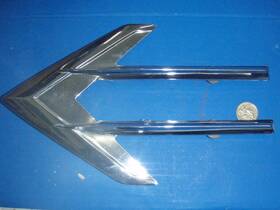
( Manufacturer Part Number: 5949212 ), ( Part Type: Fender Emblem ), ( Oe/oem Part Number: 529728 ), ( Vintage Part: Yes ), ( Placement On Vehicle: Front, Left ), ( Country Of Origin: United States )
Review PONTIAC Chieftain Chrome Front Fender Emblem fits BONNEVILLE CATALINA 1958
The **Pontiac 5949212 B-58 5949206 1958 Bonneville Chieftain Catalina front fender emblem** is a meticulously crafted, high-quality reproduction emblem that captures the iconic spirit of the legendary 1958 Pontiac line one of the most celebrated eras in American automotive history. This emblem, part of the coveted **Bonneville, Chieftain, and Catalina** trim packages, exudes the bold, chrome-laden elegance of the mid-century muscle car era, when Pontiac set the standard for performance and panache. The **B-58** designation itself is a nod to the legendary **316 cubic-inch V8 engine**, a powerhouse that propelled Pontiacs to victory in the Trans-Am series and earned the brand a reputation for raw, unapologetic speed. The **1958 model year** was particularly significant, as Pontiac introduced its signature **Tri-Power** (three two-barrel carburetors) and later the **Fuel-Injected B-58**, which became a symbol of automotive innovation and power.
This front fender emblem is a **chrome-plated, die-cast metal** piece, designed to replicate the original factory specification with precision. The **Bonneville** name, rendered in bold, script-like lettering, sits atop a sleek, angular block, while the **Chieftain** or **Catalina** designation appears below in a slightly smaller, yet equally distinctive font, creating a balanced and eye-catching hierarchy. The **1958 date** is subtly integrated into the design, often positioned within the emblem s base or along the lower edge, ensuring it remains a subtle yet unmistakable part of the aesthetic. The **B-58** badge, if included, is typically placed prominently, either adjacent to the model name or as a standalone element, reinforcing the engine s legendary status. The entire assembly is finished with a **highly polished chrome plating**, giving it a reflective, almost mirror-like sheen that catches the light and adds a touch of vintage glamour to any 1958 Pontiac restoration or custom build.
Beyond its aesthetic appeal, this emblem is a **functional and historical statement piece**, bridging the gap between classic automotive heritage and modern appreciation for period-correct detailing. Whether installed on a meticulously restored **1958 Bonneville**, a **Chieftain**, or a **Catalina**, it serves as a proud declaration of ownership and a tribute to an era when American cars were built to dominate both the street and the track. The emblem s design reflects the **bold, futuristic styling** of the late 1950s, with its sharp angles, sweeping curves, and the unmistakable Pontiac "arrowhead" influence all hallmarks of General Motors most daring divisions. For enthusiasts, collectors, and customizers, this piece is more than just an accessory; it s a **piece of automotive legend**, ensuring that every drive in a 1958 Pontiac feels like a journey through time.
### **Pros and Cons of Buying a 1958 Pontiac Bonneville/Chieftain/Catalina Front Fender Emblem (VINs: 5949212, B2-58, 5949206)**
#### **Pros**
1. **Classic American Muscle Car Heritage**
The 1958 Pontiac Bonneville, Chieftain, and Catalina (with the distinctive front fender emblem) are iconic symbols of 1950s automotive design and performance. These cars represent the early days of American muscle, with a powerful V8 engine and a bold, aggressive stance.
2. **Strong Engine Options**
The **389 cubic-inch V8** (in the Bonneville) was a dominant engine of its time, producing around **288 316 horsepower** depending on tuning. This made it a fast and capable car for its era, capable of reaching speeds well over 100 mph in stock form. The **287 V8** (found in the Chieftain and Catalina) was also a solid performer, offering good reliability for a mid-1950s muscle car.
3. **Timeless Styling**
The **1958 Pontiac** features a bold, chrome-laden design with a long hood, sweeping fenders, and a distinctive front grille. The **front fender emblem** (a rare and desirable feature) adds to its collectibility. Many owners appreciate the car s aggressive, retro aesthetic, which holds up well in classic car circles.
4. **Potential for Restoration or Restoration Potential**
If the car is in rough condition, it can be a rewarding project. Many parts are still available from specialty suppliers, and the engine is relatively straightforward to rebuild. A well-restored 1958 Pontiac can be a stunning show car or a reliable daily driver with modern modifications.
5. **Strong Community & Enthusiast Support**
The classic Pontiac community is active, with clubs (such as the **Pontiac Owners Club**) and forums where owners share restoration tips, parts, and restoration experiences. This makes it easier to find help if needed.
6. **Good Investment Potential**
Well-preserved examples, especially those with the **front fender emblem**, can appreciate in value over time. Restored cars in concours condition are highly sought after by collectors.
---
#### **Cons**
1. **High Maintenance & Restoration Costs**
Like all classic cars, a 1958 Pontiac requires **regular maintenance** rust repair, suspension work, electrical system updates, and engine tuning. If the car is in poor condition, restoration costs can be **significant**, often exceeding $10,000 or more depending on the extent of work needed.
2. **Common Rust Issues**
Many 1958 Pontiacs suffer from **frame rust**, especially in the wheel wells, rocker panels, and floor pans. A thorough inspection is essential before purchasing, as rust repairs can be labor-intensive and expensive.
3. **Outdated Safety & Comfort Features**
Modern safety standards (airbags, stability control, modern seat belts) are absent. The car lacks modern comforts like power steering, power brakes, and modern climate control. Driving one today requires **adjustment** and may feel less safe than a modern vehicle.
4. **Fuel & Emissions Challenges**
The **389 V8** is thirsty expect **12 15 MPG** in stock form. Modern emissions regulations mean modifications (like deleting the carburetor or installing a modern exhaust) may be necessary to avoid legal issues in some states.
5. **Parts Availability & Cost**
While many parts are still available, **rare or original components** (especially for the Bonneville) can be expensive. Some items (like period-correct gauges, interior trim, or rare body panels) may require sourcing from collectors or custom fabricators.
6. **Driving Experience Limitations**
The **manual transmission** (if equipped) can be stiff, and the **steering and suspension** are less refined than modern cars. The ride can be **bouncy and noisy**, especially on rough roads. Modern drivers may find the **lack of power steering** and **softer suspension** uncomfortable for daily use.
7. **Insurance & Registration Costs**
Classic car insurance exists, but premiums can be **higher** than for a modern vehicle, especially if the car is restored or modified. Some states have **higher registration fees** for vintage cars.
8. **Potential for Hidden Mechanical Issues**
The **389 V8** is robust but prone to **valve spring failure, rod bearing wear, and oil leaks** if not maintained properly. The **transmission (especially the automatic)** can be finicky. A **pre-purchase inspection (PPI) by a classic car mechanic** is strongly recommended.
---
### **Conclusion**
Buying a **1958 Pontiac Bonneville/Chieftain/Catalina with the front fender emblem** can be a **fantastic investment** if you are prepared for the challenges. These cars are **iconic, powerful, and stylish**, but they require **significant time, money, and effort** to restore or maintain properly.
If you are an **enthusiast with mechanical skills, patience, and a long-term vision**, a well-chosen example can be a **rewarding project** that appreciates in value. However, if you are looking for a **low-maintenance, modern alternative**, this car is not the best choice.
---
### **Recommendation**
1. **If You Are Buying for Investment or Restoration:**- **Get a thorough inspection** by a **Pontiac specialist** before purchasing.
- **Prioritize rust-free examples** with a **complete service history**.
- **Budget for restoration costs** expect **$10,000 $30,000 ** depending on condition.
- **Join classic Pontiac forums** to learn from experienced owners.
2. **If You Are Buying for Driving Enjoyment:**- Consider a **restored or well-maintained example** (preferably with modern safety upgrades like roll cages if track use is intended).
- Be prepared for **higher insurance costs** and **limited daily usability**.
- If you want a **more modern but still classic** alternative, look at **restored 1960s Pontiacs (GTO, Tempest, etc.)**, which may be easier to maintain.
3. **If You Are Unsure:**- **Rent or borrow one first** to experience its driving dynamics before committing.
- **Start with a less expensive classic** (like a 1957 or 1959 Pontiac) to gain experience before tackling a 1958.
**Final Verdict:**A **1958 Pontiac Bonneville/Chieftain/Catalina with the front fender emblem** is a **great choice for dedicated classic car enthusiasts** who appreciate its history, performance, and style. However, it is **not a beginner-friendly purchase** and requires **serious commitment**. If you are willing to put in the work, it can be an **incredibly rewarding** addition to your collection. If not, consider alternatives that offer similar nostalgia with less maintenance.
Details:
USED LH fender ornament for 1958 Pontiac front top. Driver condition chrome or core for re plate. OR have spares just in case.
part #: 5949212 prices
- $64.99-$400.00
specifications emblico:
- for models: Bonneville, Catalina
- for makes: Pontiac
- for years: 1958
- mpn: 5949212
- part type: Fender Emblem
- oe/oem part number: 529728
- vintage part: Yes
- placement on vehicle: Front, Left
- country of origin: United States
shipping emblico:
- transit: 4-7 Days
- class: Economy
- cost: $15.00
- carrier: UPS
- type: Fixed
- service: UPS Ground Saver
general emblico:
- condition: New
- Car Truck Parts Accessories > Exterior Parts Accessories > Emblems Ornaments
payments emblico:
- money order
- wallet: Apple-pay
- credit card: Discover
- other
- cash
- check
returns emblico:
- paid by: Seller
- time: 30 Days
- policy: Returns Accepted
seller emblico:
- # reviews: 7541
- rating: 99.8%
- city: Greenbush, Wisconsin
offer emblico:
- sold: 0
- availability: In Stock
- started: April 9, 2026
- quantity: 1
- options: Ship-to-home
Pontiac 5949212 Is Similar To:
- 10013558 Pontiac Gm Nameplate Grand Prix Front Grille Badge Hardware (27.2% similar) It is no longer available for purchase. Manufacturers notes due to age there is no gm factory warranty. Part plate,rad gel another nameplate, radiator grille and front end . Hardware to mount is included and all original from my pops 1984 PGP, grandfather backed into the driver side totaled car so...(September 13th, 2018)
- 10032197 Gm Pontiac Parisienne Safari Wagon Hood Ornament Header Emblem Nos (40.2% similar) There is some faint shelf-ware on the base from being stored out of its box. 303 part this is a oem gm from the 80'S, not reproduction. Show car ready. Gm group this part is specific to the years and model's listed, longer base for cars with chrome molding down of hood...(July 18th, 2018)
- 10099509 Pontiac Trans Sport Side Door Fender White Emblem Badge Oem (34.6% similar) ...(October 5th, 2018)
- 10099515 Gmc Pontiac Emblem Oem New Trans Sport Solstice Am Grand (17.6% similar) Note size and pattern for proper selection. This has adhesive backing for original hassle free replacement procedure. Pontiac oem hood emblem will fit front 92 trans sport and other products. No return available...(December 28th, 2018)
- 10246505 Pontiac Grand Prix Se Door Emblem Script Oem Nameplate Badge (24.5% similar) There is a product inspection with third party upon receiving the item. Please match our part number with your original one. Please ship the item back in its original package. If the item was damaged on return shipping due to poor packaging, is not accepted...(August 14th, 2018)
- 10255670 Pontiac Grand Prix Gt Front Bumper Dark Bronzemist Fender Emblem (34.7% similar) If the item was damaged on return shipping due to poor packaging, is not accepted. Please match our part number with your original one. Please ship the item back in its original package. There is a product inspection with third party upon receiving the item...(July 31st, 2018)
- 10264665 10255297 Pontiac Gm Oem Montana Front Nameplate (33.3% similar) No expedited shipping available. Used, sport trans, two emblems. And pictures are detailed to the best of my ability. I am human and apologize for any mistakes if made. Good condition, see pictures. Shipping only ship in the USA. Please refer to part number for exact fitment...(March 14th, 2018)
- 10270932 Pontiac 97-98 Montana Emblem (35.1% similar) ...(December 6th, 2017)
- 10409762 Gm Pontiac Grand Prix Gt Emblem Plate (27.1% similar) Oem gm parts are the best for restoring your vehicle to factory condition performance part plate, front side door fitment pontiac grand pix Cl part info no. Affordable, reliable and built to last, gm part plate, front side door stands out as the smart option. To ensure reliability, purchase gm part ...(September 4th, 2018)
- 10413185 Pontiac Montana Emblem New (29.5% similar) ...(October 18th, 2018)
- 10444642 Pontiac Good Condition Grand Prix Gtp Supercharged Emblem In (31.9% similar) ...(April 16th, 2018)