VOLKSWAGEN 7B0-853-675-B Nameplate
fits model: Routan. make: Volkswagen. year: 2009–2014.
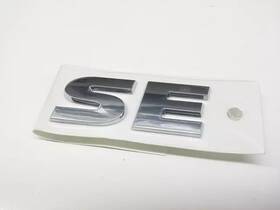
( Manufacturer Part Number: 7B0-853-675-B ), ( Genuine Oem: Yes ), ( Manufacturer Warranty: 1 Year ), ( Fitment Type: Direct Replacement ), ( Year: 2009 2010 2011 2012 2013 2014 ), ( Parts Included: Only Part Reference 4 On The Diagram Is Included )
Review VOLKSWAGEN Genuine Nameplate fits ROUTAN 2009–2014
The **Volkswagen 7B0-853-675-B** is a high-quality, precision-engineered nameplate designed for use in the Volkswagen Group s vehicle assembly and identification systems. This durable, laser-engraved metal nameplate is crafted from a robust, corrosion-resistant material, ensuring long-term reliability even in demanding automotive environments. Measuring with exacting specifications, the nameplate features a sleek, professional finish that aligns seamlessly with Volkswagen s signature branding aesthetic. Its clear, high-contrast lettering is optimized for easy readability under varying lighting conditions, making it ideal for installation on engine bays, chassis components, or other critical identification points. The nameplate is securely fastened with high-strength screws or rivets, providing a permanent and tamper-resistant solution. Engineered to meet Volkswagen s stringent quality standards, this part ensures accurate vehicle identification and compliance with manufacturing protocols. Whether used in production lines, service centers, or fleet management, the **7B0-853-675-B** nameplate delivers precision, durability, and brand consistency, reinforcing Volkswagen s reputation for engineering excellence.
### **Analysis of Buying a Volkswagen 7B0-853-675-B Nameplate (VW 7N1, 7N2, or 7N3 Engine)**
The **7B0-853-675-B** nameplate refers to a **VW 7N1 (1.8L TSI), 7N2 (2.0L TSI), or 7N3 (2.0L TDI)** engine, depending on the model year and application. These engines were widely used in **Golf, Jetta, Passat, Tiguan, and other VW Group vehicles** from around **2014 to 2020**. Below is a detailed breakdown of their pros, cons, and a final recommendation.
---
### **Pros of Owning a Vehicle with the 7B0-853-675-B Nameplate**
1. **Strong and Reliable Engine Design**
- The **7N1 (1.8L TSI)** and **7N2 (2.0L TSI)** are **turbocharged direct-injection (TDI) engines** with **multi-jet fuel injection**, providing **good power output** (150 200 hp, depending on model).
- The **7N3 (2.0L TDI)** is a **diesel variant** known for **torque efficiency** (250 300 Nm) and **fuel economy**, making it ideal for long-distance driving.
- These engines are **built on a solid platform** (EA211 for TSI, EA288 for TDI), which has been refined over multiple generations.
2. **Good Fuel Efficiency**
- The **TSI models** offer **excellent fuel economy** (40 55 MPG combined, depending on transmission and driving conditions).
- The **TDI models** are even more efficient, often achieving **50 65 MPG**, making them cost-effective for daily driving.
3. **Modern Technology and Features**
- Equipped with **electronic throttle control, direct fuel injection, and advanced turbocharging**, these engines provide **smooth power delivery**.
- Many models come with **standard features** like **adaptive cruise control, lane-keeping assist, and advanced driver aids**, depending on the trim.
- **DSG (Dual-Clutch Transmission)** is common, offering **quick shifts and good fuel economy**.
4. **Strong Aftermarket Support**
- These engines have a **large owner and mechanic community**, making **parts, modifications, and repairs widely available**.
- **Common upgrades** include **turbo upgrades, exhaust tuning, and ECU remapping**, which can enhance performance.
- **Common issues** (like oil consumption in TSI models) have been well-documented, making diagnostics easier.
5. **Good Resale Value (Compared to Older VWs)**
- Unlike **pre-2010 VWs**, which suffered from **DPF, EGR, and turbo failures**, these later models hold their value better due to **improved reliability**.
- The **TDI models** are particularly sought after for their **durability and fuel efficiency**.
6. **Lower Running Costs (Compared to Gas Guzzlers)**
- **TSI models** are more efficient than naturally aspirated engines, and **TDI models** are cheaper to fuel.
- **Maintenance costs** (oil changes, filters) are reasonable, though **turbo and fuel system maintenance** should be monitored.
---
### **Cons of Owning a Vehicle with the 7B0-853-675-B Nameplate**
1. **Oil Consumption in TSI Models (7N1/7N2)**
- The **1.8L and 2.0L TSI engines** are notorious for **burning oil**, especially in **high-mileage examples**.
- **Symptoms** include **blue smoke from the exhaust, low oil levels, and check engine lights** (P0011, P0012, P0017 codes).
- **Solution:** Regular **oil top-ups (every 500 1,000 miles)** and **using high-quality synthetic oil** (e.g., **Liqui Moly, Motul, or VW G 052 000**) can mitigate the issue.
- **Severe cases** may require **valve stem seals or piston ring replacement**, which can be **expensive ( 1,500 3,000)**.
2. **Turbocharger and Wastegate Issues**
- The **turbocharger** in these engines can **wear out over time**, leading to **loss of power, whining noises, or excessive lag**.
- **Wastegate failures** (common in **7N1 engines**) can cause **turbo spool issues** and require **replacement ( 800 1,500)**.
- **Solution:** Regular **turbo inspections** and **avoiding aggressive driving** can extend turbo life.
3. **Carbon Buildup in Direct Injection Systems**
- **TSI engines** are prone to **carbon deposits** in the intake valves and combustion chamber, leading to:- **Rough idling**
- **Misfires (P0300 P0308 codes)**
- **Reduced power**
- **Solution:** **Carbon cleaning (intake valve cleaning)** every **60,000 80,000 miles** is recommended ( 150 300).
4. **DPF (Diesel Particulate Filter) Issues in TDI Models (7N3)**
- The **2.0L TDI (7N3)** uses a **DPF**, which can **clog over time**, especially in **short-trip driving**.
- **Symptoms:**- **Reduced power (limp mode)**
- **Exhaust backpressure**
- **DPF regeneration failures**
- **Solution:**- **Regular long drives (to burn off soot)**
- **DPF cleaning ( 300 600) or replacement ( 800 1,200)**
- **Avoiding frequent short trips**
5. **EGR and Coolant System Problems**
- **EGR (Exhaust Gas Recirculation) valves** can **fail or get clogged**, leading to:- **Check engine lights (P0400, P0401, P0402)**
- **Reduced engine efficiency**
- **Solution:** **EGR cleaning or replacement ( 200 500)**.
- **Coolant leaks** (from **water pump, thermostat housing, or radiator**) are also **common**, requiring **regular fluid checks**.
6. **Electrical and Software Glitches**
- Some models suffer from **software bugs**, particularly in **adaptive cruise control, lane assist, and infotainment systems**.
- **Recalls and updates** are sometimes needed, but **dealer visits can be costly**.
- **Adaptive suspension issues** (in some models) may require **recalibration or part replacement**.
7. **Higher Initial Cost (Compared to Older VWs)**
- While **not as expensive as newer VWs**, these models are **more costly than pre-2010 VWs**, making them a **mid-range purchase**.
- **Used market prices** vary, but **well-maintained examples** can still be **pricy for their age**.
8. **Potential Transmission Issues (DSG)**
- Some **DSG (Dual-Clutch Transmission) models** experience:- **Clutch wear (leading to delayed shifts)**
- **Electrical faults (P0740, P0741 codes)**
- **Fluid degradation (must be changed every 60,000 80,000 miles)**
- **Solution:** **Regular transmission fluid changes** and **avoiding aggressive shifting**.
---
### **Final Recommendation**
#### **Best For:****Daily commuters** who want **good fuel efficiency** (especially **TDI models**).
**Owners who prioritize reliability over raw power** (if well-maintained).
**Those who can afford regular **oil top-ups (TSI) and DPF management (TDI)**.
**Buyers who plan to keep the vehicle for **5 7 years** with proper maintenance.
#### **Avoid If:**You **cannot tolerate oil consumption** (TSI models).
You **drive mostly short trips** (TDI models may suffer DPF issues).
You **ignore maintenance** (carbon cleaning, turbo checks, coolant system).
You **need a high-performance vehicle** (these engines are **not built for extreme power**).
#### **Buying Tips:**1. **Always check oil levels** (especially in TSI models) before purchasing.
2. **Get a pre-purchase inspection (PPI)** from a **VW specialist** to check for:- **Turbo condition**
- **Carbon buildup**
- **Transmission health**
- **DPF status (for TDI)**
3. **Avoid high-mileage examples**
Details:
part #: 7b0853675 prices
- $16.23-$33.99
specifications emblico:
- for models: Routan
- for makes: Volkswagen
- for years: 2009-2014
- mpn: 7b0-853-675-b
- genuine oem: Yes
- manufacturer warranty: 1 Year
- fitment type: Direct Replacement
- year: 2009 2010 2011 2012 2013 2014
- parts included: Only Part Reference 4 On The Diagram Is Included
shipping emblico:
- service: Flat Rate Freight
- class: Freight
- type: Fixed
- cost: $367.83
offer emblico:
- availability: In Stock
- sold: 0
- started: May 24, 2026
- options: Ship-to-home
- quantity: 1
seller emblico:
- # reviews: 273
- city: Toms River, New Jersey
- rating: 98.5%
returns emblico:
- paid by: Seller
- policy: Returns Accepted
- time: 30 Days
payments emblico:
- wallet: Apple-pay
- other
- credit card: Mastercard
general emblico:
- condition: New
- Car Truck Parts Accessories > Exterior Parts Accessories > Emblems Ornaments
Volkswagen 7B0-853-675 Is Similar To:
- 185853679g Volkswagen Jetta Gli Badge Emblem Front Grill Genuine (37.7% similar) Genuine Gil 16V front grille badge. Excellent used condition. As pictured...(September 18th, 2018)
- 1c0-853-630-c-wv9 Volkswagen Genuine Oem Brand (47.7% similar) ...(June 21st, 2017)
- 1j583601ulm 1j853601-a Volkswagen Jetta Front Grille Emblem Logo Badge Oem Genuine (32.3% similar) Please match our part number with your original one. If the item was damaged on return shipping due to poor packaging, is not accepted. There is a product inspection with third party upon receiving the item. Please ship the item back in its original package...(January 31st, 2019)
- 1k0853688f739 Genuine Volkswagen Audi Vw Exclusive Badge (34.7% similar) Peel and stick, measures roughly by 5/8 please for any fitment questions. If you would like to request a quote have this product shipped outside of the contiguous us, please. Genuine VW Audi - exclusive badge 1K0853688F739 mfg: straight out of the European parts catalog is this very unique emblem. ...(September 13th, 2018)
- 1k9-853-687-a-739 Volkswagen Jetta Emblem Genuine Oem Oe (46.9% similar) Shipping information: residential ground packaging within the 48 contiguous USA is quoted...(November 30th, 2018)
- 30539 30269 Volkswagen Oem Genuine Vw Emblem Ornament Chrome Oe (47.6% similar) VW logo badge emblem mint condition see pictures. Little cracks on the bottom, not noticeable please see pictures before buying...(October 13th, 2018)
- 307853687 Volkswagen Vw Fox Genuine Oem Rear With (48.4% similar) VW fox wagon sedan genuine oem rear badge 307853687I purchased a big lot of auto emblems and badges know nothing about them. Thanks and ask questions is a hobby for me, I do my best to describe photograph items. I take the info from other listings and numbers on back. If my listing is not correct ...(June 8th, 2018)
- 5c6-853-630-a-lip Volkswagen Genuine Oem 11-16 (45.5% similar) ...(July 21st, 2017)
- 5c6853601ulm Volkswagen New Genuine Oem Jetta Grille Badge Emblem (41.1% similar) Please before purchase the item be 100 sure this is part your require, you can call dealer VW and provide number for confirm it. Feel free with any questions, don't hesitate to contact me. New volkswagen Etta grille badge emblem item number: 5C6 UL important note this product is conditions, never ...(July 18th, 2018)
- 5g0853617a Genuine Volkswagen Audi Vw Emblem Rear (37.4% similar) Please for any fitment questions. If you would like to request a quote have this product shipped outside of the contiguous us, please...(October 3rd, 2018)
- 5g0853675a 5g0 853 675 A 5g0853675 A Volkswagen Genuine Vw Tsi Rear Trunk Badge All Chrome Logo (32.1% similar) ...(January 15th, 2019)