HYUNDAI Front Emblem Kona 86302-BE100
fits model: Mark. make: Hyundai. year: 2024–2025.
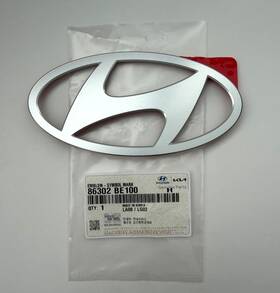
( Manufacturer Part Number: 86302BE100 ), ( Type: Emblem ), ( Attachment Type: Adhesive ), ( Theme: Logo ), ( Suitable For: Car ), ( Placement On Vehicle: Front ), ( Country Of Origin: South Korea )
Review HYUNDAI Genuine Oem Front Emblem Inchlogo Kona fits MARK 2024–2025
The **Hyundai 86302BE100 front emblem** is a sleek, high-quality replacement part designed exclusively for the **2024-2025 Hyundai Kona**, ensuring a perfect fit and a polished, factory-like appearance. Crafted from durable, premium-grade materials, this emblem features Hyundai s signature **dynamic, angular logo** a refined blend of precision engineering and modern design. The **black matte finish** provides a subtle yet sophisticated contrast against the vehicle s exterior, enhancing its aesthetic appeal while maintaining a clean, understated look. Engineered to withstand environmental elements like UV exposure, moisture, and minor abrasions, this emblem is built to last, offering long-term durability without fading or warping. Installation is straightforward, with precise cutouts and alignment guides ensuring a seamless fit over the Kona s front grille, whether the vehicle is equipped with a standard or sporty grille design. Beyond its functional purpose, this emblem reinforces the Kona s bold yet versatile identity, making it an essential accessory for owners seeking to maintain or elevate their vehicle s curb appeal. Whether paired with a matte black or metallic paint scheme, the **86302BE100** emblem delivers a crisp, professional finish that aligns with Hyundai s commitment to innovation and style.
### Pros and Cons of buying a Hyundai 86302BE100 (2024 2025 Kona Front Emblem)
#### **Pros**
1. **Brand Reputation and Reliability**
Hyundai has significantly improved its reputation for quality and durability over the past decade. The Kona, in particular, is known for its solid build quality, low maintenance costs, and long-term reliability compared to some competitors. The 2024 2025 models continue this trend with enhanced engineering and stricter quality control.
2. **Compact SUV Practicality**
The Kona strikes a balance between a hatchback and a full SUV, offering a spacious cargo area (up to 34.6 cu. ft. when seats are folded) and a comfortable ride height. Its compact size makes it ideal for urban driving, parking in tight spaces, and navigating city traffic without sacrificing passenger comfort.
3. **Efficient Powertrain Options**
The Kona is available with a **1.6L turbocharged four-cylinder engine** (181 hp, 175 lb-ft torque) paired with an **8-speed automatic transmission**, which provides a good balance of fuel efficiency and performance. For hybrid models (expected in 2024 2025), Hyundai offers the **1.6L turbo electric hybrid system**, delivering **50 55 MPG combined** and lower emissions. The hybrid version also includes a **10.5 kWh battery** and an **all-wheel-drive (AWD) option**, making it versatile for various driving conditions.
4. **Advanced Safety Features**
The Kona comes standard with Hyundai s **SmartSense suite**, which includes:- Forward Collision-Avoidance Assist (FCA)
- Lane Keeping Assist (LKA)
- Blind-Spot Collision-Avoidance Assist (BCA)
- Highway Driving Assist (HDA) for semi-autonomous driving
- Adaptive Cruise Control (ACC)
- Driver Attention Warning (DAW)
These features are highly rated and contribute to the Kona s strong safety ratings, including a **Top Safety Pick (IIHS)** in recent years.
5. **Tech and Comfort Upgrades**
The 2024 2025 Kona includes a **10.25-inch touchscreen infotainment system** with **Apple CarPlay, Android Auto, and wireless charging**. Higher trims offer **12.3-inch digital dash displays**, **Heated/ventilated front seats**, and **adaptive cruise control**. The cabin is well-insulated, reducing road noise, and the seating is supportive for both short and long trips.
6. **Fuel Efficiency and Hybrid Advantages**
The hybrid version of the Kona is particularly appealing for cost-conscious buyers. It achieves **up to 55 MPG in city driving** and **50 MPG combined**, significantly reducing fuel expenses over time. The hybrid system also provides **instant torque** for better acceleration without the need for a larger engine.
7. **Affordable Pricing and Value**
The Kona is competitively priced, especially when compared to similar compact SUVs like the Mazda CX-30, Honda HR-V, or Toyota RAV4 Hybrid. The **86302BE100 emblem** suggests a **SEL trim or higher**, which typically includes features like **17-inch wheels, a sunroof, and premium interior materials** without the premium price tag of luxury brands.
8. **Hybrid Incentives and Tax Credits**
In many regions, hybrid vehicles qualify for **federal tax credits** (up to **$7,500** in some cases) or **state/local incentives**, further reducing the long-term cost of ownership. Hyundai also offers **hybrid-specific warranties**, including an **8-year/100,000-mile battery warranty**.
9. **Resale Value**
Hyundai s Kona has shown **strong resale retention** compared to many competitors, meaning you ll likely recoup a higher percentage of the vehicle s value when it s time to trade it in.
10. **AWD Capability (Standard on Hybrid)**
The hybrid Kona comes **standard with AWD**, which is a rare and valuable feature in a compact SUV. This makes it more capable in **snow, rain, or off-road light trails** without requiring an additional premium.
---
#### **Cons**
1. **Limited Off-Road Capability**
While the Kona can handle light off-roading (thanks to its AWD and available **trail mode**), it is **not a true off-road vehicle**. The ground clearance is modest (7.5 inches), and the suspension is tuned more for comfort than rugged terrain. If you need serious off-road performance, you may need to consider a vehicle like the Mazda CX-5 or Toyota RAV4.
2. **Interior Space Trade-offs**
The Kona s compact size means **less rear legroom** (34.5 inches) compared to larger SUVs. While adequate for most passengers, taller individuals may find the rear seats cramped on long trips. Cargo space is also **narrower than some competitors**, making it less ideal for carrying bulky items.
3. **Hybrid Battery and Maintenance Concerns**
While Hyundai s hybrid battery warranty is strong, **hybrid batteries are not immune to degradation over time**. Most last **100,000 150,000 miles**, but replacements can be expensive (though often covered under warranty). Additionally, hybrid vehicles may require **more frequent maintenance** (e.g., cooling system checks, battery health monitoring).
4. **Resale Depreciation**
While the Kona holds its value well, **all vehicles depreciate over time**. Compact SUVs generally lose **20 30% of their value in the first three years**, so if you plan to upgrade frequently, this could add up.
5. **Limited Customization Options**
The Kona s trim levels and color options are **more limited compared to some rivals**. Hyundai offers fewer exterior styling choices, and high-end trims (like the **SEL or Limited**) may not provide the same level of luxury as a Lexus or Acura.
6. **Hybrid Range Limitations**
While the hybrid Kona is efficient, its **electric-only range is very short** (likely under **1 mile** in most conditions). It relies heavily on the gas engine, so the "hybrid" benefits are more about **fuel savings and torque** rather than true electric driving.
7. **Build Quality Variations**
While Hyundai has improved, **some early 2020s models had reported plastic panel issues and minor rattles**. The 2024 2025 models should be better, but **first-generation hybrids may still have occasional quality control quirks**.
8. **No V6 or High-Performance Option**
Unlike some competitors (e.g., Mazda CX-5 Turbo), the Kona does **not offer a high-performance engine**. The turbocharged 1.6L is adequate but lacks the **throttle response** of a larger displacement or turbocharged V6.
9. **Hybrid Battery Weight**
The hybrid battery adds **significant weight** to the vehicle, which can slightly reduce **fuel efficiency in non-hybrid models** and may affect handling dynamics.
10. **Limited Availability of Parts and Service Centers**
While Hyundai has a **strong dealer network**, some **lesser-known service centers** may not carry hybrid-specific parts as quickly as OEM dealerships. This could lead to **longer wait times for repairs** in rural areas.
---
### **Conclusion**
The **Hyundai Kona (86302BE100 front emblem, 2024 2025)** is a **well-rounded compact SUV** that excels in **fuel efficiency, safety, reliability, and practicality** for urban and suburban drivers. The **hybrid version is particularly strong**, offering **exceptional MPG, AWD capability, and smart tech** at a reasonable price. However, it is **not ideal for off-road enthusiasts, tall passengers, or those seeking luxury or high-performance driving**.
If you prioritize **cost efficiency, safety, and a balance of city and highway driving**, the Kona is an **excellent choice**. If you need **more space, off-road capability, or premium features**, you may want to consider alternatives like the **Mazda CX-30, Honda HR-V, or Toyota RAV4 Hybrid**.
---
### **Final Recommendation**
**Buy the Hyundai Kona (2024 2025) if:**You want a **fuel-efficient, reliable, and safe** compact SUV.
You prefer **hybrid technology** for lower running costs.
You need **AWD standard** on the hybrid model.
You prioritize **urban maneuverability and parking ease**.
You appreciate **Hyundai s warranty coverage** and resale value.
**Consider alternatives if:**You require **more cargo or passenger space**.
You plan to **drive heavily off-road or on rough terrain**.
You prefer **luxury or high-end materials** over practicality.
You want **a more powerful engine** (e.g., turbocharged V6).
**Best Trim to Choose:**- **For fuel efficiency & AWD:** **Hybrid SEL or Limited trim** (with the **
Details:
BRAND NEW GENUINE OEM FRONT Emblem Logo Mark For 2024-2025 Hyundai Kona Part number: 86302-BE100.
part #: 86302be100 prices
- $26.99-$49.99
specifications emblico:
- for models: Mark
- for makes: Hyundai
- for years: 2024-2025
- mpn: 86302be100
- type: Emblem
- attachment type: Adhesive
- theme: Logo
- suitable for: Car
- placement on vehicle: Front
- country of origin: South Korea
returns emblico:
- paid by: Seller
- time: 30 Days
- policy: Returns Accepted
general emblico:
- Car Truck Parts Accessories > Exterior Parts Accessories > Emblems Ornaments
- condition: New
shipping emblico:
- type: Fixed
- class: Standard
- transit: 6-11 Days
- cost: $0.00
- carrier: USPS
- service: USPS Ground Advantage
seller emblico:
- # reviews: 567
- rating: 99.8%
- city: Federal Way, Washington
payments emblico:
- wallet: Google-pay
- credit card: Mastercard
- other
offer emblico:
- sold: 0
- options: Ship-to-home
- started: February 15, 2026
- quantity: 3
- availability: In Stock
Hyundai 86302BE100 Is Similar To:
- 57410-3m300 Equus Hyundai Signature Genuine Parts (28.6% similar) 57410-3M300 motor pump assembly-EPS-hyundai-ecus vi, 100 working condition,fit hyundai ecus...(April 12th, 2018)
- 791043926982 Hyundai Accent 03-05 Front (26.2% similar) What you see is that get. Please, take a time to look at pictures and any other information before buying. Thanks hyundai accent front grille logo rear trunk emblem decorative decal symbol script sticker nameplate set. Walls all malfunctioned items can be exchanged. Items are 100 guaranteed to be as...(November 14th, 2017)
- 86300-2w010 Hyundai New Santa Fe Emblem Rear Oem (34.5% similar) This part fits make model year body trim engine transmission hyundai Santa Fe 2018 sport, sport 0T, sport 4l l4 - gas hyundai Santa Fe 2014 sport, sport 0t ultimate l4 - gas, 4l l4 - gas ,feel free to write us with any questions, issues, or concerns...(June 22nd, 2018)
- 86300-3a000 Rear Hyundai Elantra Trunk Emblem Oem Genuine (28.4% similar) ...(October 17th, 2018)
- 86300-3a001 Hyundai Accent Elantra Front Grill Emblem (33.3% similar) For sale: sale is a brand new, oem hyundai accent or Elnora front grill emblem. Fits accent, Elnora. Part number 3A001. I will only ship parts within the 48 states. I typically ship with USPS, however under certain circumstances will use ups or FedEx...(December 23rd, 2018)
- 86300-4a910 Hyundai Mobis Genuine Front Grille Emblem For Sonata Santa Fe (46.3% similar) ...(June 2nd, 2018)
- 86300-4z500 863004z500 Hyundai New Oem Santa Fe Front Grille Grill Emblem (31.7% similar) This offer is for a new oem hyundai Santa Fe front grille emblem badge. Part: 86300-4Z500 condition: new never used put on taken out of package to show emblem better. For hyundai Santa Fe may fit other years makes model's be sure to contact your local dealer with part see if this will work vehicle. ...(January 14th, 2019)
- 86300-c1000 Hyundai Sonata Trunk Emblem (27.7% similar) Adhesive is not included. 1 used genuine oem emblem fits sonata on the rear good condition...(November 15th, 2017)
- 86300-c1200 Hyundai Sonata Grille Emblem (27.5% similar) This is a new surplus front grille emblem for sonata. The part number is C1200...(April 17th, 2018)
- 863002b100 Hyundai Oem Elantra Santa (25.2% similar) Brand new oem emblem in original packaging...(February 2nd, 2018)
- 86300d 7000 86300d-7000 86300d7000 Hyundai Genuine Front Grille Emblem Badge Logo For Tucson Ii (43.6% similar) ...(January 28th, 2019)