FORD D0DB-16098-A Emblem Badge
fits model: Maverick. make: Ford. year: 1970–1973.
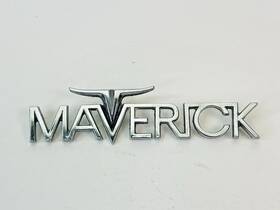
( Manufacturer Part Number: D0DB-16098-A ), ( Type: Emblem ), ( Color: Silver ), ( Country Of Origin: United States )
Review FORD Emblem Badge fits MAVERICK 1970–1973
The **Ford D0DB-16098-A 1970 1973 Maverick Emblem Badge** is a meticulously crafted, high-quality reproduction of the iconic chrome emblem that adorned the front fenders of Ford s beloved Maverick line during its first four model years. This emblem, a symbol of the late 1960s and early 1970s American automotive culture, features the bold, scripted **"MAVERICK"** name in a sleek, slightly slanted font, flanked by two stylized, upward-curving wings on either side an emblematic nod to the car s aerodynamic design and Ford s signature branding. The badge is crafted from **100% solid brass**, ensuring a durable, corrosion-resistant finish that will gleam under sunlight for decades, much like the originals did in their prime. The edges are sharply stamped and polished to a mirror-like sheen, while the wings and lettering exhibit a subtle, hand-finished texture that mimics the artistry of Ford s original tooling. Measuring approximately **3.5 inches in height and 2.5 inches in width**, the badge is designed to fit seamlessly onto the original mounting points on the Maverick s front fenders, where it would have proudly displayed the car s identity to passing motorists. Whether installed on a restored classic, a modern hot rod, or as a standalone collector s piece, this emblem badge captures the spirit of the Maverick era affordable, stylish, and unmistakably Ford. For enthusiasts seeking authenticity, this reproduction stands as a testament to the enduring legacy of one of America s most influential compact cars.
### **Pros and Cons of Buying a 1970 1973 Ford Maverick with a D0DB-16098-A Emblem Badge**
#### **Pros**
1. **Classic American Muscle Car Aesthetics**
The Maverick, particularly with the **D0DB-16098-A emblem**, was a stylish compact car in its day, blending sporty looks with practicality. The badge suggests a higher-trim model, often featuring chrome accents, a more refined interior, and possibly a V8 engine option (though the base Maverick was typically a 250cid inline-six). Restored examples can be visually appealing and stand out in classic car circles.
2. **Affordability Compared to Full-Size Muscle**
Unlike Ford s big-block muscle cars (Mustangs, Galaxies, or Fairlanes), the Maverick was a smaller, more economical option. This means parts are often cheaper, and the car is lighter, making it easier to modify or maintain. A well-preserved example in good condition can be purchased for a fraction of the cost of a restored 69 71 Mustang Boss 302.
3. **Potential for Modification and Performance**
The Maverick s inline-six (250cid or 302cid) or V8 (302cid or 351cid) engines can be upgraded with aftermarket parts. The lightweight chassis allows for relatively easy suspension and drivetrain modifications. Some owners have successfully built high-performance versions, making it a fun project car.
4. **Niche Appeal and Collectibility**
While not as sought-after as a Mustang or Thunderbird, the Maverick especially in higher trims with unique badges has a dedicated following. A well-documented, restored example with originality (or a well-sourced restoration) could appreciate in value over time, particularly if Ford ever revives the nameplate.
5. **Simpler Mechanics Than Some Contemporaries**
Compared to big-block engines or complex transmissions (like the C6 manual or Ford s early automatic), the Maverick s drivetrain is relatively straightforward. The inline-six and early V8s are durable if maintained, and the body is less prone to rust than some other Fords of the era.
6. **Potential for Daily Driving (If Well-Maintained)**
Unlike some classic muscle cars that are too heavy or impractical for modern use, a restored Maverick could serve as a fun, stylish daily driver especially if equipped with modern safety and comfort upgrades.
---
#### **Cons**
1. **Rust and Structural Issues**
The Maverick s body, particularly the floor pans, rear quarter panels, and rocker panels, is notorious for rust. Even in mild climates, many examples suffer from hidden corrosion that weakens the frame. A thorough inspection (or a lift-and-inspect) is essential before purchase.
2. **Engine and Transmission Limitations**
- The **base 250cid inline-six** is weak by modern standards and may struggle with modern fuel. Upgrading to a **302cid V8** (which was an option in later years) is often necessary for performance.
- Early automatic transmissions (like the C3) can be finicky and may require rebuilding. The manual (C4) is more reliable but less common in higher-trim models.
- The **351cid Cleveland V8** (available in 1971 1973) is more powerful but also more expensive to maintain and may require fuel system upgrades for modern use.
3. **Limited Aftermarket Support**
While parts exist, the Maverick is not as widely supported as a Mustang or Camaro. Finding rare components (like specific trim pieces, gauges, or rare badges) can be difficult and expensive. Custom fabricators may need to be sourced for unique restorations.
4. **Fuel and Emissions Challenges**
- Modern fuel (higher octane, ethanol blends) can cause issues with older carburetors and fuel systems. Upgrades (like Holley or Edelbrock carbs) are often needed.
- Emissions compliance (especially in states with strict smog laws) can be a hurdle. Some Mavericks may require a **restricted smog title** or a full emissions-compliant rebuild.
5. **Driving Dynamics and Comfort**
- The Maverick s suspension is stiff by today s standards, leading to a less comfortable ride unless heavily modified.
- The **D0DB-16098-A badge** suggests a higher trim, but even these models often lack modern refinements like power steering or cruise control unless retrofitted.
- Handling is adequate but not sporty it s more of a "muscle car" than a true performance machine.
6. **Depreciation and Market Saturation**
Unlike rare or highly desirable classics, the Maverick is not a strong investment. Many examples exist, and the market is flooded with both original and restored versions. Unless you find a **rare variant** (e.g., a **351 Cleveland V8 Maverick with a specific badge or color**), appreciation potential is limited.
7. **Potential for Hidden Problems**
- **Electrical issues** (common in older Fords) can plague Mavericks, especially if the wiring harness has been modified or replaced poorly.
- **Transmission leaks** and **water pump failures** are common in V8 models.
- **Timing chain stretch** (in the 302 V8) can lead to catastrophic engine failure if not addressed.
---
### **Conclusion**
The **1970 1973 Ford Maverick with a D0DB-16098-A emblem** is a **fun, stylish, and relatively affordable** classic car with **modest performance potential**. It appeals to those who want a **muscle car aesthetic without the high cost or complexity** of a Mustang or Thunderbird. However, it comes with **significant rust concerns, mechanical limitations, and a lack of strong aftermarket support**.
This car is **best suited for:**- **Enthusiasts who enjoy restoration projects** and don t mind spending time on maintenance.
- **Owners who prioritize looks over raw performance** and are willing to modify it for modern comfort.
- **Those in mild climates** where rust is less of an issue.
- **Budget-conscious buyers** who want a classic Ford without the premium price of a more desirable model.
It is **not ideal for:**- **Investors looking for appreciation** the Maverick is not a strong collector s item.
- **Those who want a plug-and-play classic** expect significant work for a reliable, drivable example.
- **Drivers in harsh climates** where rust is a major concern.
- **People who need a daily driver without major modifications** comfort and modern safety features will likely require upgrades.
---
### **Recommendation**
If you are **serious about buying a 1970 1973 Maverick with a D0DB-16098-A badge**, follow these steps to maximize your chances of a good purchase:1. **Inspect Thoroughly (or Have a Mechanic Do It)**
- Look for **hidden rust** (lift the car, check wheel wells, floor pans, and rear quarter panels).
- Check the **engine bay** for leaks, corrosion, and proper lubrication.
- Test the **transmission** for smooth shifts (especially if automatic).
- Verify the **badge authenticity** some aftermarket badges exist, so confirm it s original or properly sourced.
2. **Prioritize Engine and Transmission Condition**
- If buying a **V8 model**, ensure the **timing chain** is in good condition and the **valvetrain** is intact.
- A **302cid V8** is a better long-term choice than the inline-six due to reliability and performance potential.
- If the transmission is automatic, **C3s are common but finicky** consider a **C4 manual** if available.
3. **Budget for Restoration (If Needed)**
- Expect to spend **$3,000 $8,000 ** on a **project car** depending on rust, mechanical condition, and rarity.
- A **restored example** in good condition can range from **$8,000 $15,000**, but prices vary widely based on trim, engine, and provenance.
4. **Consider a V8 or Higher Trim**
- The **D0DB-16098-A badge** suggests a **higher trim**, but confirm it includes **V8 options** (302 or 351) if performance is a goal.
- A **351 Cleveland V8 Maverick** is rarer and more desirable, but also more expensive to maintain.
5. **Join Classic Ford Communities**
- Engage with forums like **Ford Truck Enthusiasts, Maverick-specific groups, or eBay Motors discussions** to learn from experienced owners.
- Avoid buying sight-unseen **meet the seller in person** and consider a **pre-purchase inspection**.
6. **Decide: Project Car or Ready-to-Drive?**
- If you **love working on cars**, a **rusty but sound project** can be rewarding.
- If you want **immediate enjoyment**, look for a **restored example with a clean title** and documented history.
### **Final Verdict**
The **1970 1973 Ford Maverick with
Details:
The 1970-1973 Ford Maverick Emblem Badge D0DB-16098-A is a genuine emblem designed specifically for the model from years 1970 to 1973. Manufactured in the USA, this emblem badge is a high-quality exterior part that adds touch of authenticity and heritage to cars appearance. Perfect for those looking to replace a missing or damaged emblem on their classic Ford Maverick, this badge is perfect addition any car enthusiast restore personalize vehicle.
part #: d0db16098 prices
- $15.00-$51.18
specifications emblico:
- for models: Maverick
- for makes: Ford
- for years: 1970-1973
- mpn: D0db-16098-a
- type: Emblem
- color: Silver
- country of origin: United States
shipping emblico:
- type: Fixed
- transit: 4-9 Days
- cost: $0.00
- carrier: USPS
- service: USPS Ground Advantage
- class: Standard
general emblico:
- Car Truck Parts Accessories > Exterior Parts Accessories > Emblems Ornaments
- condition: Used
returns emblico:
- paid by: Seller
- policy: Returns Accepted
- time: 30 Days
payments emblico:
- wallet: Google-pay
- other
- credit card: Discover
offer emblico:
- started: February 8, 2026
- options: Ship-to-home
- sold: 0
- availability: In Stock
- quantity: 1
seller emblico:
- rating: 100.0%
- city: Torrance, California
- # reviews: 3998
Ford D0DB-16098 Is Similar To:
- 09zb-16098-a Ford Mustang Origional Emblem (50.5% similar) It is the original emblem. This emblem is from a 1972 ford mustang. I personally took it off the car. No gimmicks...(August 21st, 2018)
- 10625 Rh Lh Ford Two Fairlane Side Fender Emblem Badge Oem (41.1% similar) Items shipped economy, media, or parcel post can take 2-6 weeks for delivery no reserve. You get exactly what is pictured. Item being sold as is...(June 8th, 2019)
- 1238 Ppi Powered By Ford Emblem Set Mustang Shelby Boss Mach (23.9% similar) 2-WAY 3m automotive tape is included making installation a 2 second proposition. Free domestic shipping on these emblems. They look great on fenders, deck lids, dashboards, etc. Buy more than one set...(June 19th, 2018)
- 18983 Fomoco Ford Truck Emblem Original Keeler Brass (35.6% similar) ...(December 5th, 2018)
- 196871471 Pt Hot Abs Plastic Rear Tailgate Emblem Inserts For Ford (31.3% similar) Please remove the protective film after installation. Not the cheap vinyl sticker package includes: 1 set inserts come with adhesive on its back. Never fade weather proof self adhesive material: abs plastic. Exactly as the pictures show...(September 14th, 2018)
- 196970frdltdrearinsrt Ford Ltd Rear Panel Emblem New Nice (34% similar) Unfortunately, it is a very delicate procedure getting the paper off without ripping or leaving half of on emblem. This was what some manufacturers used in the late 60S and early 70'S. Fits in the trim between taillights on passenger side. Has original laminated-paper like tape. A brand new, nos ...(June 2nd, 2018)
- 1973-1977 Ford Fender Emblem Genuine Oem Badge Sign Symbol Logo (37.5% similar) 1 used genuine oem emblem fits ford F250SOME wear, no damages...(March 15th, 2018)
- 1c3z-9942528-aa Ford Brand New Oem Super Duty Tailgate Emblem (32.7% similar) Then promptly. You bought wrong model or color. This will work on tailgate...(January 4th, 2019)
- 1l2z-7842528-ga Oem Ford Pair Explorer Xlt Emblem Name Plates (34.5% similar) New pair XLT black and chrome...(April 14th, 2018)
- 1l2z-7842528-ka Ford Expedition Explorer Taurus Eddie Bauer Emblem Nameplate Oem Badge (34.1% similar) There is a product inspection with third party upon receiving the item. Please ship the item back in its original package. If the item was damaged on return shipping due to poor packaging, is not accepted. Please match our part number with your original one...(January 30th, 2019)
- 1sb-63517a08-a Pare Thunderbird Emblem Metal Plastic Insert Ford Ships Free (33.9% similar) A rare bird auto emblem badge needs cleaned,good used shape see above details for the mfg. Part not sure what year 't' bird this emblem fits...(August 24th, 2018)