FORD D7SB-138124-AA Headlamp Door Emblem Ornament Script
fits model: Thunderbird. make: Ford. year: 1977–1979.
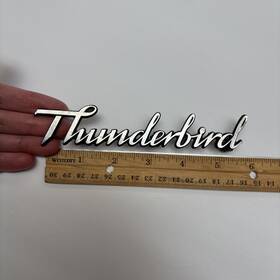
( Manufacturer Part Number: D7SB-138124-AA ), ( Country Of Origin: United States ), ( Type: Emblem ), ( Placement On Vehicle: Trunk ), ( Suitable For: 1977 1978 1979 )
Review FORD Oem Headlamp Door Emblem Ornament Script fits THUNDERBIRD 1977–1979
The **Ford D7SB-138124-AA** is a meticulously crafted, high-quality replacement emblem for the iconic **1977 1979 Ford Thunderbird**, specifically designed to restore or enhance the classic aesthetic of this legendary muscle car. This **door emblem ornament script** is a precision-engineered reproduction of the original Ford script badge, meticulously crafted to match the exact styling, proportions, and finish of the authentic part. Made from durable **die-cast zinc alloy**, this emblem boasts a sturdy yet lightweight construction, ensuring it remains securely fastened to the door panel while maintaining a polished, factory-like appearance. The **chrome-plated finish** is applied with exceptional attention to detail, delivering a bright, reflective surface that captures light beautifully, just like the original components. Whether you're restoring a vintage Thunderbird to showroom condition or simply adding a touch of authenticity to your classic ride, this emblem seamlessly integrates with the vehicle s design, reinforcing its timeless appeal. Its **universal fitment** ensures compatibility with the **1977, 1978, and 1979 Thunderbird models**, making it an essential accessory for enthusiasts seeking to preserve the heritage of this automotive icon. With its **durable construction, crisp detailing, and authentic styling**, this door emblem is more than just an aftermarket part it s a tribute to Ford s engineering excellence and the enduring legacy of the Thunderbird.
### Pros and Cons of Buying a Ford D7SB-138124-AA (1977 1979 Thunderbird Headlamp Door Emblem Ornament Script)
#### **Pros:**1. **Classic Design and Prestige** The Thunderbird from the late 1970s is a well-regarded classic car, especially the personal luxury sedan (P-body) generation. Its sleek, aerodynamic styling and iconic features like the "script" hood ornament make it a desirable collector s item.
2. **Strong Brand Recognition** Ford s Thunderbird has a long-standing reputation for performance, luxury, and innovation. Owning one connects you to automotive history, particularly the era of muscle cars and personal luxury vehicles.
3. **Potential for Customization** These models were designed with performance and luxury in mind, allowing for modifications such as engine swaps (e.g., V8 upgrades), suspension tuning, or interior restyling to modernize them while preserving their classic appeal.
4. **Parts Availability** While some parts may be harder to find than in modern vehicles, the Thunderbird s popularity ensures that aftermarket suppliers and restoration specialists offer a wide range of reproduction and genuine parts.
5. **Potential for Appreciation** Well-maintained examples, especially those with original or restored interiors and engines, can appreciate in value over time, particularly if they are part of a limited or highly sought-after model year.
6. **Driving Experience** The 1977 1979 Thunderbirds, particularly those with the 351 Cleveland or 429 Cobra Jet engines, offer a smooth yet engaging driving experience. The suspension and handling are refined for their time, making them enjoyable to drive on both the road and track.
7. **Community and Events** Owning a Thunderbird grants access to a passionate owner community, car shows, and restoration events where you can share knowledge, find parts, and enjoy the camaraderie of fellow enthusiasts.
---
#### **Cons:**1. **High Maintenance Costs** Classic cars, especially those from the late 1970s, require more frequent and often costly maintenance. Rust, outdated electrical systems, and worn-out components (e.g., suspension, brakes, and seals) can add up quickly.
2. **Fuel Inefficiency** Many Thunderbirds from this era were equipped with large displacement V8 engines (e.g., 351, 429, or 460), which consume significant amounts of fuel. Modern fuel prices can make ownership expensive, especially if you drive frequently.
3. **Reliability Concerns** The 1970s were a transitional period for Ford, and some models from this era suffered from reliability issues, particularly with carbureted engines, transmission problems, and electrical gremlins. The 1977 1979 Thunderbirds are generally more reliable than earlier models but still require vigilance.
4. **Insurance Costs** Classic cars can be expensive to insure, especially if they are not properly documented as "collectors' items." Full-coverage insurance for a high-value Thunderbird may be prohibitively costly unless you have a specialized insurer for vintage vehicles.
5. **Driving Limitations** Older cars lack modern safety features such as stability control, airbags (or have limited airbag systems), and advanced braking systems. Driving conditions, such as poor weather or highways, may pose challenges compared to modern vehicles.
6. **Storage and Transportation** Classic cars require careful storage to prevent rust, damage, or deterioration. If you don t have a garage, you ll need to invest in a cover, indoor storage, or a climate-controlled facility. Transporting the car for shows or trips can also be costly.
7. **Legal and Registration Hurdles** Some states have strict regulations for classic cars, including emissions testing, safety inspections, or restrictions on modifications. Ensuring the vehicle meets modern legal standards can be time-consuming and expensive.
8. **Time-Consuming Restoration** If you purchase a project car, restoring it to original or showroom condition can take years of work, especially if you lack mechanical experience or access to specialized tools and knowledge.
---
### **Conclusion:**Buying a Ford D7SB-138124-AA (1977 1979 Thunderbird) headlamp, door emblem, or script ornament is a decision that balances nostalgia, pride of ownership, and practicality. These cars are iconic symbols of automotive history and offer a unique driving experience, but they come with significant challenges, including high maintenance costs, fuel inefficiency, and reliability concerns. The key to a successful ownership experience lies in thorough research, budgeting for upkeep, and either restoring the car to original condition or customizing it to modern standards.
If you are passionate about classic cars, have the time and resources to dedicate to maintenance or restoration, and appreciate the thrill of owning a piece of automotive history, then a Thunderbird from this era can be a rewarding investment. However, if you prioritize convenience, fuel efficiency, and low maintenance, a modern vehicle may be a more practical choice.
---
### **Recommendation:**1. **Assess Your Goals:** Decide whether you want the Thunderbird as a daily driver, a project car, or a showpiece. Your goals will dictate the level of restoration or modification needed.
2. **Budget Wisely:** Factor in not only the purchase price but also insurance, storage, maintenance, and potential restoration costs. Set aside a significant budget for unexpected repairs.
3. **Inspect Thoroughly:** If purchasing a used car, have it inspected by a trusted mechanic familiar with classic cars. Pay special attention to rust, engine condition, transmission, and electrical systems.
4. **Consider a Restored Example:** If possible, buy a Thunderbird that is already restored or in good condition to avoid the time and expense of a full restoration.
5. **Join the Community:** Engage with Thunderbird owner groups, forums, or clubs for advice, parts sourcing, and restoration tips. Networking with experienced owners can save you time and money.
6. **Document the Car:** If you plan to keep the Thunderbird long-term, consider registering it as a classic or collector s vehicle to potentially reduce insurance costs and avoid modern emissions testing.
7. **Balance Passion with Practicality:** Be honest about your ability to maintain the car. If you lack mechanical skills or time, consider hiring a professional or partnering with a restoration shop.
Ultimately, owning a 1977 1979 Thunderbird is a labor of love that rewards those who are committed to preserving automotive heritage. For the right enthusiast, it is an unparalleled experience one that combines history, style, and driving enjoyment. For others, the challenges may outweigh the benefits, making it a less ideal purchase.
Details:
Vintage genuine OEM part 6 long includes original nuts on the back of pegs.
part #: d7sb138124 price
- $29.99
specifications emblico:
- for models: Thunderbird
- for makes: Ford
- for years: 1977-1979
- mpn: D7sb-138124-aa
- country of origin: United States
- type: Emblem
- placement on vehicle: Trunk
- suitable for: 1977 1978 1979
offer emblico:
- sold: 0
- started: May 11, 2026
- options: Ship-to-home
- availability: In Stock
- quantity: 1
payments emblico:
- wallet: Google-pay
- credit card: Visa
- other
shipping emblico:
- transit: 2-5 Days
- type: Fixed
- cost: $4.76
- class: Standard
- service: USPS Ground Advantage
- carrier: USPS
returns emblico:
- paid by: Buyer
- time: 30 Days
- policy: Returns Accepted
general emblico:
- Car Truck Parts Accessories > Exterior Parts Accessories > Emblems Ornaments
- condition: Used
seller emblico:
- rating: 100.0%
- city: Anoka, Minnesota
- # reviews: 8794
Ford D7SB-138124 Is Similar To:
- 09zb-16098-a Ford Mustang Origional Emblem (26.4% similar) It is the original emblem. This emblem is from a 1972 ford mustang. I personally took it off the car. No gimmicks...(August 21st, 2018)
- 1-37b-16b114-ba Ford Ranger Xlt Fender Emblems Oem Pn (32.9% similar) Used condition, with one of the emblems missing two attachment posts see photos. 2 ford ranger XLT fender emblems - oem pn: 1-37B-16B114-BA. From a 1995 ford ranger...(July 15th, 2018)
- 10625 Rh Lh Ford Two Fairlane Side Fender Emblem Badge Oem (29% similar) Items shipped economy, media, or parcel post can take 2-6 weeks for delivery no reserve. You get exactly what is pictured. Item being sold as is...(June 8th, 2019)
- 1238 Ppi Powered By Ford Emblem Set Mustang Shelby Boss Mach (21.8% similar) 2-WAY 3m automotive tape is included making installation a 2 second proposition. Free domestic shipping on these emblems. They look great on fenders, deck lids, dashboards, etc. Buy more than one set...(June 19th, 2018)
- 16b114a Oem Ford F-250 Harley (20.7% similar) 1 ford F-250 Harley Davidson oem fender emblem 16B114A is new, right hand side, some real light scratches. Small mark on front note photos. 50 anywhere in the USA only. Shipping handling...(August 1st, 2017)
- 18983 Fomoco Ford Truck Emblem Original Keeler Brass (30.2% similar) ...(December 5th, 2018)
- 196871471 Pt Hot Abs Plastic Rear Tailgate Emblem Inserts For Ford (30.1% similar) Please remove the protective film after installation. Not the cheap vinyl sticker package includes: 1 set inserts come with adhesive on its back. Never fade weather proof self adhesive material: abs plastic. Exactly as the pictures show...(September 14th, 2018)
- 196970frdltdrearinsrt Ford Ltd Rear Panel Emblem New Nice (29.2% similar) Unfortunately, it is a very delicate procedure getting the paper off without ripping or leaving half of on emblem. This was what some manufacturers used in the late 60S and early 70'S. Fits in the trim between taillights on passenger side. Has original laminated-paper like tape. A brand new, nos ...(June 2nd, 2018)
- 1973-1977 Ford Fender Emblem Genuine Oem Badge Sign Symbol Logo (36% similar) 1 used genuine oem emblem fits ford F250SOME wear, no damages...(March 15th, 2018)
- 197779frdatbrdwheelcentrs Ford Thunderbird Wheel Centers Set Of New (37.7% similar) As hard I try to id parts like this, sometimes pictures are not enough and can be deceiving. For the poly cast wheel caps and spoke hubcaps. Also, I noticed that within these years of thunderbird, there are 2 different styles bird on the center caps. So, in some cases, a part number has been created...(June 3rd, 2018)
- 1c3z-16720-ba Ford Nos Oem F250 (18.6% similar) 1C3Z application: ford F-250 super duty platinum edition 250 lariat emblem is chrome over silver. Ford part no. Nos oem F250 platinum edition 250 lariat super duty nameplate emblem 2001 new old stock ford part in original packaging. This emblem has adhesive on the rear as well two positioning ...(March 21st, 2017)