HYUNDAI FE2013 Emblem
fits model: Santa. make: Hyundai. year: 2014–2018.
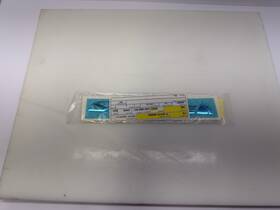
( Manufacturer Part Number: FE2013 ), ( Type: Emblem ), ( Oe/oem Part Number: 86300-2w010 ), ( Color: Silver ), ( Attachment Type: Adhesive ), ( Theme: Logo ), ( Vintage Part: No ), ( Finish: Chrome ), ( Suitable For: Car ), ( Placement On Vehicle: Rear )
Review HYUNDAI Fe 2013 Chrome Emblem New Oem fits SANTA 2014–2018
The Hyundai Emblem badge, a symbol of the brand s evolution and enduring commitment to innovation, quality, and global presence, has adorned the front grille of select Hyundai models from 2013 through 2018, including the iconic **Hyundai FE (Futuristic Experience) concept vehicles** and certain production models like the **Hyundai Genesis Coupe** and **Hyundai Genesis G80** (in its early iterations). Crafted with meticulous attention to detail, this emblem represents Hyundai s blend of cutting-edge engineering and timeless design philosophy, reflecting the brand s journey from a manufacturer known for reliability and affordability to a sophisticated player in the luxury and performance automotive market.
The Hyundai Emblem from this era features a sleek, modern interpretation of the brand s logo, characterized by a **stylized "H" within a circular frame**, where the horizontal bar of the "H" subtly curves upward, giving it a dynamic, forward-moving appearance. The design often incorporates a **matte or glossy finish**, depending on the model s trim level, with some versions showcasing a **chrome or polished metal plating** for a premium look. The circular border of the emblem is typically smooth and unadorned, allowing the "H" to stand out prominently, while others may include subtle texturing or a slight three-dimensional effect to enhance depth. In certain high-end applications, such as those found on the **Genesis Coupe or G80**, the emblem may be paired with a **smaller, secondary badge** such as the "Genesis" name just below it, signifying the model s elevated status within Hyundai s lineup.
Beyond its aesthetic appeal, the Hyundai Emblem from these years carries symbolic weight, embodying the brand s **global aspirations and technological advancements**. Hyundai s push into the luxury segment during this period was marked by investments in performance, safety, and advanced driver-assistance systems, and the emblem serves as a visual testament to this transformation. The materials used in its production whether **high-grade stainless steel, premium plastics, or even lightweight composites** reflect Hyundai s dedication to balancing heritage with modernity. Whether affixed to the front grille of a **2013 Genesis Coupe with its sharp, angular styling** or the more refined **2017 Genesis G80 with its aerodynamic contours**, the badge remains a consistent yet evolving representation of Hyundai s identity.
For collectors, enthusiasts, and automotive historians, the Hyundai Emblem from 2013 to 2018 holds particular significance as a transitional piece, marking the brand s shift toward luxury and performance. Its design language clean, confident, and forward-thinking mirrors Hyundai s broader strategic pivot during this decade, making it not just a decorative element but a **cultural artifact** of the brand s reinvention. Whether displayed on a classic FE concept car or a production model, the emblem stands as a reminder of Hyundai s relentless pursuit of excellence, blending heritage with innovation in every detail.
Buying a Hyundai Emblem (a rebadged version of the Hyundai Elantra) from the model years 2013 to 2018 can be a practical choice for budget-conscious buyers, but it comes with both advantages and drawbacks. Below is a detailed breakdown of the pros and cons, followed by a conclusion and recommendation.
---
### **Pros of Buying a Hyundai Emblem (2013 2018)**
1. **Affordability**
- These models are significantly cheaper than newer vehicles, making them an attractive option for those on a tight budget. Prices typically range from $5,000 to $12,000 depending on mileage, condition, and location.
- Lower upfront cost means more flexibility in financing or saving for other expenses.
2. **Decent Reliability for the Price**
- Hyundai improved its reliability significantly in the 2010s, and the Emblem (based on the Elantra) is generally considered a solid compact car. The 2.0L Gamma (GDI) engine (2013 2016) and the 1.8L Nu (2017 2018) are known for durability if maintained properly.
- The transmission (5-speed manual or 6-speed automatic) is straightforward and rarely problematic in these years.
3. **Fuel Efficiency**
- The 2013 2016 models with the 2.0L engine average **28 32 MPG combined**, while the 2017 2018 1.8L models improve slightly to **30 34 MPG combined**. This is competitive for a compact car in this price range.
- The automatic transmission is smooth and efficient, though the manual is more engaging for drivers who prefer it.
4. **Comfortable Ride and Practicality**
- The Emblem offers a spacious cabin with decent legroom for front and rear passengers. The rear seat is foldable, providing flexibility for cargo.
- The ride is smooth for a compact car, with well-tuned suspension that absorbs minor road imperfections without being too soft.
5. **Basic but Functional Features**
- Even in lower trim levels, these models come with standard features like **air conditioning, power windows, a CD player (or Bluetooth in later years), and a decent infotainment system** (though the screen is small in earlier models).
- The 2017 2018 models introduce minor upgrades like a touchscreen (in some trims) and improved safety ratings (IIHS Top Safety Pick in 2017).
6. **Resale Value (Relative to Class)**
- While not exceptional, Hyundai s resale value holds up better than many domestic brands in this price range. The 2017 2018 models hold value slightly better due to minor upgrades.
7. **Warranty Considerations (If Applicable)**
- If buying from a dealer with a **certified pre-owned (CPO) program**, some models may still have **remaining factory warranty coverage** (e.g., powertrain warranty extending to 10 years/100,000 miles for some years).
- Private sellers may offer extended warranties, though these should be scrutinized carefully.
8. **Good for First-Time Buyers or Budget Stretchers**
- The Emblem is a practical choice for first-time car buyers, students, or those who need a reliable daily driver without breaking the bank.
- It can also serve as a "stretch" car for someone who wants something slightly nicer than a Honda Civic or Toyota Corolla but doesn t need a luxury vehicle.
---
### **Cons of Buying a Hyundai Emblem (2013 2018)**
1. **Outdated Technology and Infotainment**
- The **2013 2016 models** have a **clunky, non-touchscreen infotainment system** with a small display and limited connectivity (no Apple CarPlay/Android Auto until 2017).
- The **2017 2018 models** improve slightly with a **smaller touchscreen** (in higher trims) and basic Bluetooth, but still lack modern features like wireless charging or advanced driver aids.
- Navigation is available in some trims but is often outdated by the time you buy it.
2. **Rust Concerns (Especially in Snowy or Coastal Areas)**
- Hyundai s early 2010s models have had **reports of rust issues**, particularly in the wheel wells, rocker panels, and undercarriage. This is more common in vehicles exposed to salt (snowy climates) or high humidity.
- Always **inspect for rust** before purchasing, especially if buying from a private seller. A rusted-out car can lead to costly repairs.
3. **Engine and Transmission Quirks**
- The **2.0L Gamma (GDI) engine (2013 2016)** is generally reliable but can develop **oil consumption issues** over time, leading to frequent oil changes. Some owners report burning oil, which can damage the engine if ignored.
- The **1.8L Nu engine (2017 2018)** is more efficient but has had **some reports of carbon buildup** in the intake valves, which can reduce performance. A **carbon cleaning service** may be needed every 30,000 50,000 miles.
- The **automatic transmission** is durable but can be **slow to shift** in stop-and-go traffic, and some owners report **whining noises** under load.
4. **Interior Quality and Build**
- The **plastic trim feels cheap** compared to competitors like Toyota or Honda. The materials are functional but lack the premium feel of newer Hyundai models.
- **Cabin noise** can be noticeable at highway speeds, though this is common in compact cars.
5. **Safety Ratings (Compared to Modern Standards)**
- While the **2017 Emblem received a Top Safety Pick from the IIHS**, earlier models (2013 2016) have **lower safety ratings** due to weaker crash test scores in some areas.
- **No standard rearview camera** (added in 2017), which is a modern safety feature.
- **Basic safety tech** (e.g., no lane-keeping assist, automatic emergency braking, or blind-spot monitoring) compared to newer Hyundai models.
6. **Depreciation and Age**
- These models are **over a decade old**, meaning parts may become harder to find as Hyundai phases out older components.
- **Labor costs** for repairs can be high if the car needs significant work, as mechanics may charge more for older models.
7. **Resale Value Decline**
- Even if well-maintained, these cars will **lose value quickly** compared to newer models. If you plan to sell or trade in later, you may not recoup much.
8. **Potential Hidden Issues**
- **Water pump failures** (especially in the 2.0L engine) can occur around **80,000 100,000 miles**, leading to overheating.
- **Suspension wear** (shocks, struts) may need replacement after **50,000 70,000 miles**, adding to maintenance costs.
- **Electrical gremlins** (e.g., flickering lights, dashboard warnings) are common in older Hyundais and can be frustrating to diagnose.
9. **Fuel Economy Drop in Real-World Use**
- While the EPA ratings are decent, **real-world MPG can be lower**, especially in city driving or with heavy foot. The automatic transmission s shifting can also slightly reduce efficiency.
10. **Limited Customization and Upgrade Options**
- Unlike newer models, there are **few aftermarket upgrades** available for these Emblems. Performance chips, exhaust systems, or suspension upgrades are rare and may not be worth the cost.
---
### **Conclusion**
The Hyundai Emblem (2013 2018) is a **solid, budget-friendly compact car** that offers **reliability, fuel efficiency, and practicality** for the right buyer. It is best suited for:
- **First-time car buyers** who need a dependable vehicle without spending much.
- **Budget-conscious drivers** who prioritize affordability over modern tech.
- **Those in good climates** (low rust risk) who can maintain the car properly.
- **People who don t need advanced safety or infotainment features**.
However, it is **not ideal** for:- **Drivers who want a car with modern tech** (touchscreen, Apple CarPlay, safety aids).
- **Those in snowy or coastal areas** (rust risk increases maintenance costs).
- **People who plan to keep the car long-term** (depreciation and part availability issues).
- **Those who want a premium feel** (interior and build quality are basic).
---
### **Recommendation**
If you decide to buy a Hyundai Emblem from these years, follow these steps to maximize your purchase:1. **Buy from a Reputable Source**
- **Dealer CPO program** (if available) offers warranty coverage and inspections.
- **Private sale** should only be considered if you **thoroughly inspect the car** or have a trusted mechanic do so.
- Avoid "too good to be
Details:
Hyundai Santa Fe XL: 2019 model's without the Sport trim. Attachment: applied with adhesive. Color/Finish: Often described as silver. The part number 86310-B8000 corresponds to the genuine Hyundai rear hatch Santa Fe emblem/nameplate, specifically designed for certain model years without Sport designation.
Placement: Rear lift gate/trunk/hatch of the vehicle. And Specifications Part: Emblem-Santa, LHS Left-hand side when facing the rear of vehicle or Nameplate. Hyundai Santa Fe: 2013, 2014, 2015, 2016, 2017, 2018 model's without the Sport trim.
part #: fe2013 prices
- $34.50-$225.00
specifications emblico:
- for models: Santa
- for makes: Hyundai
- for years: 2014-2018
- mpn: Fe2013
- type: Emblem
- oe/oem part number: 86300-2w010
- color: Silver
- attachment type: Adhesive
- theme: Logo
- vintage part: No
- finish: Chrome
- suitable for: Car
- placement on vehicle: Rear
payments emblico:
- credit card: Mastercard
- wallet: Apple-pay
- other
returns emblico:
- policy: No Returns
general emblico:
- condition: New
- Car Truck Parts Accessories > Exterior Parts Accessories > Emblems Ornaments
seller emblico:
- city: Winder, Georgia
- rating: 100.0%
- # reviews: 29
offer emblico:
- sold: 0
- availability: In Stock
- quantity: 1
- started: February 14, 2026
- best offers: True
- options: Ship-to-home
shipping emblico:
- cost: $5.20
- class: Standard
- transit: 5-10 Days
- service: USPS Ground Advantage
- carrier: USPS
- type: Calculated
Hyundai FE2013 Is Similar To:
- 86300-2w010 Hyundai New Santa Fe Emblem Rear Oem (52.2% similar) This part fits make model year body trim engine transmission hyundai santa fe 2018 sport, sport 0T, sport 4l l4 - gas hyundai santa fe 2014 sport, sport 0t ultimate l4 - gas, 4l l4 - gas ,feel free to write us with any questions, issues, or concerns...(June 22nd, 2018)
- 86300-3a000 Rear Hyundai Elantra Trunk Emblem Oem Genuine (40.3% similar) ...(October 17th, 2018)
- 86300-3a001 Hyundai Accent Elantra Front Grill Emblem (40% similar) For sale: sale is a brand new, oem hyundai accent or Elnora front grill emblem. Fits accent, Elnora. Part number 3A001. I will only ship parts within the 48 states. I typically ship with USPS, however under certain circumstances will use ups or FedEx...(December 23rd, 2018)
- 86300-4a910 Hyundai Mobis Genuine Front Grille Emblem For Sonata Santa Fe (34.3% similar) ...(June 2nd, 2018)
- 86300-4z500 863004z500 Hyundai New Oem Santa Fe Front Grille Grill Emblem (21.4% similar) This offer is for a new oem hyundai santa fe front grille emblem badge. Part: 86300-4Z500 condition: new never used put on taken out of package to show emblem better. For hyundai santa fe may fit other years makes model's be sure to contact your local dealer with part see if this will work vehicle. ...(January 14th, 2019)
- 86300-c1000 Hyundai Sonata Trunk Emblem (39.6% similar) Adhesive is not included. 1 used genuine oem emblem fits sonata on the rear good condition...(November 15th, 2017)
- 86300-c1200 Hyundai Sonata Grille Emblem (41.1% similar) This is a new surplus front grille emblem for sonata. The part number is C1200...(April 17th, 2018)
- 863002b100 Hyundai Oem Elantra Santa (29.1% similar) Brand new oem emblem in original packaging...(February 2nd, 2018)
- 86300d 7000 86300d-7000 86300d7000 Hyundai Genuine Front Grille Emblem Badge Logo For Tucson Ii (29.3% similar) ...(January 28th, 2019)
- 86310-2c000 Hyundai Tuscani Tiburon Emblem (36.7% similar) All claims for damaged merchandise must be made with the shipping carrier. Absolutely no return or exchange on merchandise that shows signs of having been used, installed, mounted. 95ALL other 12. Items included Tuscan emblem part numbers 2C000 item images back to top vehicle APPLICATION2003 hyundai...(January 20th, 2018)
- 86310-2m000 Genuine Oem Hyundai Genesis Coupe Rear Emblem For (34.4% similar) ...(January 31st, 2019)