FORD FL1Z-1542528-A Hatch Emblem
fits model: Expedition. make: Ford. year: 2015–2017.
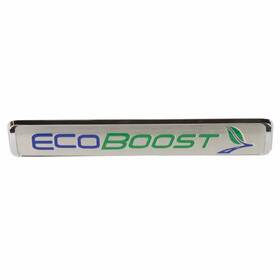
( Manufacturer Part Number: FL1Z-1542528-A ), ( Part Type: Emblem ), ( Parts Included: Only Part Reference 13 On The Diagram Is Included ), ( Fitment Type: Direct Replacement ), ( Genuine Oem: Yes ), ( Placement On Vehicle: Rear ), ( Year: 2015 2016 2017 ), ( Manufacturer Warranty: 1 Year )
Review FORD Genuine Hatch Emblem fits EXPEDITION 2015–2017
The **Ford FL1Z-1542528-A Hatch Emblem** is a meticulously crafted, high-quality replacement emblem designed to restore the authentic look and branding of a Ford vehicle s rear hatch or liftgate. Engineered to match the original specifications, this emblem features a sleek, chrome-plated finish that gleams under sunlight and complements the vehicle s overall aesthetic with a polished, premium appearance. The design is precise, with sharp, clean lines and a bold, easily readable "Ford" logo, ensuring it aligns perfectly with the factory fitment. Constructed from durable materials, this emblem is built to withstand the elements, including UV exposure, moisture, and minor impacts, making it a long-lasting upgrade for both classic and modern Ford models. Whether installed on a vintage Mustang, a contemporary Focus, or a rugged F-Series truck, this emblem enhances the vehicle s curb appeal while maintaining the integrity of its original branding. Its universal compatibility ensures a hassle-free installation, allowing enthusiasts and owners to effortlessly restore or upgrade their vehicle s rear design with confidence.
### Pros and Cons of Buying a Ford FL1Z-1542528-A (Hatch Emblem)
#### **Overview**
The Ford FL1Z-1542528-A is a model from the **Ford Fiesta (MK7, 2011-2017)** range, specifically a **hatchback variant** with a unique "hatch emblem" (likely a special edition or trim level). This vehicle was part of the **second generation of the Fiesta**, known for its compact size, fuel efficiency, and affordability. Below is a detailed breakdown of its advantages and disadvantages.
---
### **Pros**
1. **Compact and Maneuverable Size**
The Fiesta is a subcompact car, making it ideal for urban driving, tight parking spaces, and navigating congested city streets. Its small footprint also translates to lower fuel consumption and easier handling.
2. **Fuel Efficiency**
The Fiesta is renowned for its **excellent fuel economy**, especially in its **1.25L or 1.4L EcoBoost engine variants**. These engines deliver strong performance while consuming as little as **4.5-5.5L/100km** in city driving, depending on the model. Diesel options (e.g., 1.6L TDCi) also offer good efficiency for highway driving.
3. **Affordable Purchase and Maintenance Costs**
- **Initial Cost:** The Fiesta is one of the most budget-friendly new cars in its class, with used models (especially older generations) being even more affordable.
- **Repair Costs:** Ford s Fiesta has a reputation for **reliability and lower maintenance costs** compared to some competitors. Common issues (e.g., oil consumption in older EcoBoost engines) are well-documented and often manageable with regular servicing.
- **Parts Availability:** As a widely sold model, spare parts are readily available and inexpensive.
4. **Good Driving Dynamics**
The Fiesta is praised for its **precise steering, responsive handling, and engaging driving experience**, particularly in its sportier trims (e.g., ST-Line or Titanium). The car feels nimble and fun to drive, making it a favorite among enthusiasts.
5. **Reliability (With Caveats)**
- The **1.25L and 1.4L engines** (especially the non-turbocharged versions) are known for **long-lasting durability** if maintained properly.
- The **1.6L TDCi diesel** is robust and suitable for high-mileage drivers.
- The **EcoBoost engines (1.0L or 1.6L)** are powerful but have **higher oil consumption risks** (especially in the 1.0L) and may require more frequent oil changes. Some owners report **carbon buildup in the intake valves** after high mileage, which can reduce performance.
6. **Comfortable Interior**
- The cabin is **well-insulated**, reducing road noise, and offers **adequate space** for passengers and cargo (though rear legroom is limited).
- Modern trims (post-2013) feature **better materials, infotainment systems (SYNC), and driver aids** like stability control and hill-start assist.
- The **hatchback variant** provides **practical rear cargo space** (up to 300L when seats are folded).
7. **Safety Features (Depending on Model Year)**
- **Standard Safety:** Most models include **ABS, EBD, stability control, and multiple airbags**.
- **Higher Trims (Titanium, ST-Line):** Offer **additional safety tech** like **rearview camera, blind-spot monitoring, and lane-keeping assist** (in later models).
- **Euro NCAP Ratings:** The Fiesta has **consistently scored well** in crash tests, with the **2012-2017 models earning 4 or 5 stars** in various regions.
8. **Resale Value**
The Fiesta holds its value **better than many competitors** in its class, especially the **Titanium and ST-Line trims**. This makes it a smart long-term investment if you plan to sell later.
9. **Special Edition Appeal (Hatch Emblem)**
- If the **"hatch emblem"** indicates a **limited or special edition trim**, it may come with **unique badging, colors, or interior upgrades** (e.g., leather seats, alloy wheels, or sport-tuned suspension).
- Special editions can add **resale value or aesthetic appeal** for collectors or enthusiasts.
10. **Aftermarket Support**
- The Fiesta has a **large aftermarket community**, offering **tuning options, performance upgrades, and cosmetic modifications** (e.g., exhausts, suspension kits, or cosmetic parts).
- Popular tuning brands like **Ford Performance, BHR, or Stage 1/2 kits** can enhance power and handling.
---
### **Cons**
1. **Engine Reliability Issues (EcoBoost Variants)**
- **1.0L EcoBoost:** Known for **high oil consumption** (some owners report burning **1L every 1,000-2,000 km**). This can lead to **premature engine failure** if not addressed.
- **1.6L EcoBoost:** More reliable but still prone to **carbon buildup** and **oil leaks** from the **valve cover gasket**.
- **Solution:** Regular **oil changes (every 5,000-7,500 km)** and **carbon cleaning** (every 60,000-80,000 km) are critical.
2. **Interior Quality (Lower Trims)**
- **Base models (Ambiente, Trend)** use **cheap plastics and thin materials**, which can feel **cheap and noisy**.
- **Higher trims (Titanium, ST-Line)** improve this, but even then, the **steering wheel and gear shift** may still feel **basic**.
- **Infotainment:** Older models (pre-2013) have **clunky touchscreens**, while newer ones (SYNC 2) are better but still not as smooth as competitors like the **Volkswagen Polo or Toyota Yaris**.
3. **Rear Seat and Cargo Space Limitations**
- **Rear legroom is tight**, making it uncomfortable for **tall passengers** or long trips.
- **Cargo space is adequate (300L) but not generous** folding the seats increases capacity to 1,100L, but the **hatchback s shape limits practicality** compared to larger hatchbacks.
4. **Infotainment and Tech Lag**
- **Older models (pre-2013)** lack **Apple CarPlay/Android Auto** and have **limited connectivity**.
- **SYNC 2 (post-2013)** improves this but still **lags behind rivals** like the **Skoda Fabia or Hyundai i10** in software updates and features.
- **Bluetooth connectivity** can be **unreliable** in some units.
5. **Build Quality and Noise Levels**
- **Panel gaps and rattles** are common, especially in **older models or after accidents**.
- **Wind and road noise** can be **noticeable** in higher-speed driving, though this is typical for subcompact cars.
- **Suspension tuning** in some trims can make the ride feel **too firm or bouncy**.
6. **Transmission Issues (Automatic Models)**
- The **6-speed automatic** in some Fiesta models has **reportedly poor shift quality** and **jerky gear changes**, especially in **cold weather**.
- **Manual transmissions** are generally **more reliable** but can feel **less refined** than modern automatics.
7. **Depreciation (Newer Models)**
- While the Fiesta holds value **better than many competitors**, **newer models (2015-2017)** may still depreciate faster than **premium subcompacts** (e.g., **Mazda2, Toyota Yaris**).
8. **Special Edition Limitations**
- If the **"hatch emblem"** is a **one-off or rare trim**, finding **parts or mechanics familiar with it** may be difficult.
- Some special editions may have **unique quirks** (e.g., **software glitches, rare sensor issues**) that aren t widely documented.
9. **Resale Market Competition**
- The Fiesta faces **strong competition from Japanese brands (Toyota Yaris, Honda Fit, Mazda2)** and **European rivals (Skoda Fabia, Volkswagen Polo)**, which may have **better resale demand** in some regions.
10. **Environmental Concerns (Diesel Models)**
- **1.6L TDCi diesel engines** are **less efficient in city driving** and may **fail emissions tests** in stricter regions (e.g., **California, parts of Europe post-2020**).
- **Diesel particulate filters (DPF)** can **clog over time**, requiring **costly cleaning or replacement**.
---
### **Conclusion**
The **Ford Fiesta (FL1Z-1542528-A hatch emblem)** is a **strong choice for buyers** who prioritize **fuel efficiency, affordability, and driving enjoyment** in a compact package. Its **reliability (in non-EcoBoost models), low cost of ownership,
Details:
Electrical parts are not returnable. Our three main goals are Accuracy, Efficiency, Solid Communication. Parts must be resalable and in the original packaging. Shipping Carrier substitutions may be made at our determination in an attempt to reduce shipping cost the customer.
LH Driver // RH Passenger If applicable.
part #: fl1z1542528 prices
- $40.83-$61.18
specifications emblico:
- for models: Expedition
- for makes: Ford
- for years: 2015-2017
- mpn: Fl1z-1542528-a
- part type: Emblem
- parts included: Only Part Reference 13 On The Diagram Is Included
- fitment type: Direct Replacement
- genuine oem: Yes
- placement on vehicle: Rear
- year: 2015 2016 2017
- manufacturer warranty: 1 Year
seller emblico:
- rating: 99.3%
- city: Fenton, Michigan
- # reviews: 7628
returns emblico:
- paid by: Seller
- time: 30 Days
- policy: Returns Accepted
general emblico:
- Car Truck Parts Accessories > Exterior Parts Accessories > Emblems Ornaments
- condition: New
shipping emblico:
- service: UPS Ground, UPS 2nd Day Air, UPS Next Day Air Saver
- carrier: UPS
- cost: $23.48
- transit: 4-8 Days
- class: Standard, Expedited, One-day
- type: Fixed
payments emblico:
- other
- wallet: Paypal
- credit card: Mastercard
offer emblico:
- sold: 0
- started: May 28, 2026
- availability: In Stock
- quantity: 4
- options: Ship-to-home
Ford FL1Z-1542528 Is Similar To:
- 09zb-16098-a Ford Mustang Origional Emblem (34.1% similar) It is the original emblem. This emblem is from a 1972 ford mustang. I personally took it off the car. No gimmicks...(August 21st, 2018)
- 10625 Rh Lh Ford Two Fairlane Side Fender Emblem Badge Oem (34.7% similar) Items shipped economy, media, or parcel post can take 2-6 weeks for delivery no reserve. You get exactly what is pictured. Item being sold as is...(June 8th, 2019)
- 1238 Ppi Powered By Ford Emblem Set Mustang Shelby Boss Mach (22% similar) 2-WAY 3m automotive tape is included making installation a 2 second proposition. Free domestic shipping on these emblems. They look great on fenders, deck lids, dashboards, etc. Buy more than one set...(June 19th, 2018)
- 18983 Fomoco Ford Truck Emblem Original Keeler Brass (30.4% similar) ...(December 5th, 2018)
- 196871471 Pt Hot Abs Plastic Rear Tailgate Emblem Inserts For Ford (26.4% similar) Please remove the protective film after installation. Not the cheap vinyl sticker package includes: 1 set inserts come with adhesive on its back. Never fade weather proof self adhesive material: abs plastic. Exactly as the pictures show...(September 14th, 2018)
- 196970frdltdrearinsrt Ford Ltd Rear Panel Emblem New Nice (33% similar) Unfortunately, it is a very delicate procedure getting the paper off without ripping or leaving half of on emblem. This was what some manufacturers used in the late 60S and early 70'S. Fits in the trim between taillights on passenger side. Has original laminated-paper like tape. A brand new, nos ...(June 2nd, 2018)
- 1973-1977 Ford Fender Emblem Genuine Oem Badge Sign Symbol Logo (35% similar) 1 used genuine oem emblem fits ford F250SOME wear, no damages...(March 15th, 2018)
- 1c3z-9942528-aa Ford Brand New Oem Super Duty Tailgate Emblem (41.6% similar) Then promptly. You bought wrong model or color. This will work on tailgate...(January 4th, 2019)
- 1l2z-7842528-ga Oem Ford Pair Explorer Xlt Emblem Name Plates (43.6% similar) New pair XLT black and chrome...(April 14th, 2018)
- 1l2z-7842528-ka Ford Expedition Explorer Taurus Eddie Bauer Emblem Nameplate Oem Badge (38.1% similar) There is a product inspection with third party upon receiving the item. Please ship the item back in its original package. If the item was damaged on return shipping due to poor packaging, is not accepted. Please match our part number with your original one...(January 30th, 2019)
- 1l5z-9842528-aa Ford Oem Sport Track Genuine Nameplate (46.8% similar) Package is scuffed and marked. Genuine ford part in factory sealed original package. Part inside is in excellent condition...(October 26th, 2018)