DENNIS CARPENTER TR16229E Fender Emblem
fits model: F-100, F100. make: Ford. year: 1980-81.
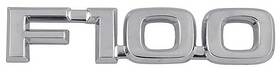
( Brand: Dennis Carpenter ), ( Manufacturer Part Number: TR16229E ), ( Part Type: Fender Emblem )
Review DENNIS CARPENTER 1980 81 Ford Truck Fender Emblem Inch fits F-100 F100 1980-81
The **Dennis Carpenter TR16229E 1980-81 Ford F-100 Fender Emblem** is a meticulously crafted, high-quality reproduction emblem designed to restore authenticity and character to your classic Ford F-100 from the early 1980s. This emblem is a faithful replication of the original factory piece, meticulously engineered to match the precise styling and proportions found on the iconic 1980-81 F-100 models. Crafted from durable, high-grade die-cast zinc alloy, the emblem boasts a polished, chrome finish that gleams under the light, ensuring a sharp, reflective surface that captures the attention of any admirer of vintage American muscle. The design features the bold, blocky "F-100" script, complete with the distinctive Ford script logo above it, all rendered with crisp, clean lines that exude the rugged yet refined aesthetic of the era. The emblem s sturdy construction and precise fitment make it an ideal upgrade for restorers, collectors, and enthusiasts seeking to enhance the visual appeal of their F-100 while maintaining historical accuracy. Whether installed on the original location behind the cab or repurposed for a custom build, this Dennis Carpenter emblem is a testament to the brand s commitment to quality and attention to detail, ensuring that your truck stands out with unmatched authenticity and prestige.
### Pros and Cons of Buying a Dennis Carpenter TR16229E (1980-81 Ford F-100 with Fender Emblem)
#### **Pros:**1. **Classic Ford F-100 Design** The 1980-81 F-100 is a well-regarded model in Ford s lineup, featuring a distinctive front-end design that remains recognizable and desirable among truck enthusiasts. The fender emblem adds a touch of authenticity and collectible value.
2. **Reliability of Ford s Early 1980s Engines** The 1980-81 F-100 typically came with Ford s **300 inline-six** or **302 V8** engines, which are known for durability if properly maintained. The inline-six, in particular, is praised for its simplicity and longevity.
3. **Strong Aftermarket Support** Ford s classic trucks, including the F-100, have a robust aftermarket community. Parts, modifications, and restoration resources are widely available, making maintenance and upgrades easier.
4. **Potential for Restoration or Customization** A well-preserved or restored 1980-81 F-100 can be a great project truck or a showpiece. The era s styling allows for a variety of modifications, from classic restorations to modern performance upgrades.
5. **Lower Purchase Price Compared to Later Models** Due to age and availability, a 1980-81 F-100 is likely to be more affordable than newer trucks, making it a budget-friendly option for buyers who prioritize character over cutting-edge features.
6. **Historical Significance** The late 1970s to early 1980s marked a transitional period for Ford trucks, blending classic styling with early 1980s updates. Owning one allows you to own a piece of automotive history.
7. **Good Towing and Hauling Capability** The F-100 was designed as a work truck, and many models in this era were equipped with robust suspension and drivetrain components suitable for towing and hauling.
---
#### **Cons:**1. **Age and Wear** At nearly 40 years old, this truck will likely require significant maintenance, including rust repairs, suspension work, and potential engine or transmission issues. Rust is a major concern, especially in areas with harsh winters or high humidity.
2. **Fuel Efficiency** The inline-six and V8 engines from this era are not fuel-efficient by modern standards. Expect poor mileage, especially if the truck is used for daily driving.
3. **Outdated Safety Features** Modern safety standards (e.g., electronic stability control, advanced airbag systems, and modern braking) are absent. The truck may lack features like anti-lock brakes (ABS) or modern seat belts, increasing safety risks.
4. **Electrical System Reliability** Older trucks often suffer from electrical gremlins, including faulty wiring, weak alternators, or failing components like gauges and lights. Restoring the electrical system can be time-consuming and costly.
5. **Limited Modern Comforts** Features like power steering, power windows, and climate control may not be standard, and even if they are present, they may require repairs or replacements. Modern ergonomics and driver aids are also lacking.
6. **Parts Availability and Cost** While aftermarket support exists, some original parts may be difficult or expensive to find. Rust-damaged components (e.g., frame rails, subframes) may require custom fabrication or replacement.
7. **Resale Value** Classic trucks can appreciate in value if well-maintained, but a heavily used or neglected 1980-81 F-100 may not hold its value well. Restoration projects can be costly, and not all buyers will appreciate the era s styling.
8. **Potential for Hidden Issues** Without a thorough inspection, buyers may inherit problems like:- **Engine or transmission wear** (e.g., valve train issues in the inline-six, transmission slippage).
- **Suspension and steering wear** (ball joints, bushings, and tie rods may need replacement).
- **Exhaust and emissions systems** (modern compliance may require modifications if the truck is used on the road).
---
### **Conclusion:**Buying a Dennis Carpenter TR16229E (1980-81 Ford F-100 with fender emblem) is a decision that hinges on your priorities. If you value **character, collectibility, and the potential for restoration or customization**, this truck offers a rewarding project with historical appeal. The F-100 s classic design and aftermarket support make it a strong candidate for enthusiasts who enjoy working on their vehicles.
However, if you prioritize **modern reliability, fuel efficiency, safety, and low maintenance**, this truck may not be the best choice. The age of the vehicle means it will likely require significant time, money, and effort to keep it running smoothly. Rust, electrical issues, and outdated systems are common challenges that could outweigh the truck s charm.
---
### **Recommendation:** 1. **If you are an experienced mechanic or willing to invest time in restoration:**- Purchase the truck **only after a thorough inspection** by a trusted mechanic or truck specialist. Focus on rust, engine condition, transmission, and suspension.
- Budget for **major repairs** (e.g., frame repairs, engine rebuild, transmission service) before buying.
- Consider **restoring it to showroom condition** if you plan to keep it long-term, as this will maximize its value and enjoyment.
2. **If you are a casual buyer or prefer modern convenience:**- Look for a **well-documented, low-mileage example** with a clean service history. Even then, expect to spend money on maintenance.
- Alternatively, consider a **newer classic Ford truck** (e.g., 1990s F-150) that offers better reliability and modern features while still retaining vintage appeal.
3. **If you want a truck for daily use:**- A 1980-81 F-100 may not be practical unless you are prepared for high operating costs. A modern used truck (e.g., 2000s or later F-150) would likely be a more cost-effective and safer choice.
**Final Verdict:** This truck is ideal for **enthusiasts who enjoy projects, restoration, or driving a piece of automotive history**. For everyone else, a more modern or lower-maintenance truck may be a better fit. Always prioritize **condition, documentation, and budget** before making a purchase.
Details:
1980 81 Ford F-100 Truck; Fender Emblem; F100: Reproduction F-Series front fender emblem for F100 Pickup Truck model's. This high quality reproduction is features OE-style die-cast construction a triple chrome-plated finish and baked on enamel paint details. Officially licensed by Ford and made in the USA.
part #: tr16229e price
- $7.00
specifications emblico:
- for models: F-100, F100
- for makes: Ford
- for years: 1980-81
- brand: Dennis Carpenter
- mpn: Tr16229e
- part type: Fender Emblem
returns emblico:
- paid by: Seller
- policy: Returns Accepted
- time: 30 Days
shipping emblico:
- cost: $10.50
- service: USPS Ground Advantage, UPS Ground, UPS 2nd Day Air, FedEx Ground / FedEx Home Delivery
- transit: 4-8 Days
- type: Calculated
- carrier: USPS, UPS, FedEx
- class: Standard, Expedited
offer emblico:
- availability: In Stock
- started: February 22, 2026
- sold: 0
- options: Ship-to-home
- quantity: 2
general emblico:
- Car Truck Parts Accessories > Exterior Parts Accessories > Emblems Ornaments
- condition: New
seller emblico:
- rating: 99.6%
- # reviews: 46112
- city: Huntington Beach, California
payments emblico:
- other
- wallet: Apple-pay
- credit card: Mastercard
Dennis Carpenter TR16229E Is Similar To:
- D6tz-9925622-b Dennis Carptner Ford Truck Ranger Emblem Pairs (54.8% similar) Seconds - products that have not met Dennis Carpenters quality standards due to various cosmetic defects. Fits: ford truck f-series ranger with out attachments part number: D6TZ b product flaw: cosmetic paint and chrome imperfections. Flaws do not affect fit or function of part...(April 6th, 2018)
- Bg-7642530-a Dennis Carpenter New Mercury Trunk Deck Lid Emblem Plastic (51% similar) Clear water, fl 33765. New condition...(May 11th, 2022)
- Dennis Carpenter 8213u 1963 Ford Galaxy Hood Pull Grille Emblem Insert Red White And Blue Crest With 3 (47.7% similar) Replaces ford part# C3AZ-8213-I. This injection molded badge is a direct replacement for the original. 1963 ford galaxy; hood pull grille emblem insert; red white blue crest with 3 lions: reproduction grille emblem insert for galaxies model's...(January 8th, 2025)
- Dennis Carpenter Tr16720m 1967 Ford F-100 Truck Hood Side Emblems Inch 100 Chrome With Red Accents (70.9% similar) These ornaments install on either side of the hood with included fasteners. 1967 ford F-100 truck; hood side emblems; ford 100 chrome with red accents: side emblem insert for pickup trucks. Sold in pairs. They feature a quality chrome die-cast housings with the correct red accent paint. Replaces ...(February 2nd, 2025)
- Dennis Carpenter Tr42528c 1980-86 Ford Truck Tailgate Name Plate Overdrive (59.5% similar) Replaces ford part# E3TZ-9942528-B. This emblem is adhesive backed. 1980 -86 ford truck; tailgate name plate; overdrive: overdrive tailgate name plate for F-100 F-150 F-250 and F-350 pickup trucks...(February 2nd, 2025)
- Dennis Carpenter Ind F2tz-16720-a Front Fender Emblem F-150 Custom 1992-96 Ford Truck (52.8% similar) Front fender emblem F-150 custom 1992 -96 ford truck, F2TZ-16720-A, features: peel stick with locating pins fits right or left hand official licensed product truck...(February 5th, 2025)
- Dennis Carpenter Ind C7tz-16098-bch Fender Emblem Black Chrome Bronco Sport 1966-77 Ford (51.9% similar) Fender emblem black chrome bronco sport 1966 -77 ford bronco, C7TZ-16098-BCH, features: with package includes mounting hardware official licensed product although correct for 1967 and up these emblems will work great on the 1966 as well great...(February 6th, 2025)
- Dennis Carpenter Ind C9gz-16228-a Front Fender Emblem 351 Blue 1966-77 Ford Bronco 1969 Fairlane (51.8% similar) Front fender emblem 351 blue 1966 -77 ford bronco, 1969 fair lane, C9GZ-16228-A, features: die cast chrome w/ background white numbers includes mounting nuts official licensed product w...(February 6th, 2025)
- Dennis Carpenter Tr8259a 1968-69 Ford F-series Truck Grill Emblem Inch Ranger Chrome Housing With Red (62.9% similar) This high quality reproduction features OE-style die-cast housing with a triple chrome-plated finish and the red plastic insert silver ranger script. Replaces ford part # C8TZ-8259-A. 1968 -69 ford f-series truck; grill emblem; ranger chrome housing with red background: reproduction grille emblem ...(March 6th, 2025)
- Dennis Carpenter Tr8315a 1948-50 And 1952 Ford F-series Truck Grill Letter Set Inch (65% similar) 1948-50 and 1952 ford f-series truck; grill letter set; ford: radiator grill panel letter set for trucks. They feature a chrome-plated finish and include clips for installation. These die-cast letters mount on the panel between grill and front of hood f1 f2 f3 f4 pickups...(April 3rd, 2025)
- Dennis Carpenter Tr16720e 1966 Ford F-100 Truck Hood Side Emblem Inch 100 Twin I Beam Chrome With (72.5% similar) Sold individually. Replaces OE part # C6TZ-16720-B. This ornament installs on either side of the hood and features a chrome metal surround with ford red plastic insert white twin I beam lettering. 1966 ford F-100 truck; hood side emblem; ford 100 twin I beam chrome with white lettering red ...(May 10th, 2025)