DODGE 1300171 Emblem Wayfarer Fluid Drive Script Badge
fits make: Dodge. year: 1949–1950.
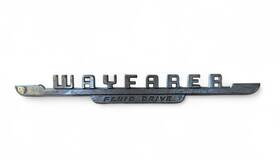
( Manufacturer Part Number: 1300171 ), ( Type: Emblem ), ( Vintage Part: Yes ), ( Universal Fitment: No ), ( Materials Sourced From: United States )
Review DODGE Oem Emblem Wayfarer Fluid Drive Script Badge fits 1949–1950
The **Dodge 1300171 Emblem** is a meticulously crafted, vintage-inspired automotive badge that harks back to the golden era of American muscle and classic design, specifically tailored to honor the iconic **1949 1950 Wayfarer** models. This premium emblem features the **Fluid Drive** script a hallmark of Dodge s innovative engineering during this transitional period between pre-war simplicity and post-war innovation where the brand began integrating advanced transmission technology to enhance performance and comfort. The badge is meticulously stamped from high-quality, durable metal, likely brass or zinc alloy, ensuring a polished, reflective finish that exudes authenticity and timeless elegance. The **Wayfarer** name is elegantly scripted in a bold, slightly rounded serif font, evoking the mid-century aesthetic of the era, while the **Fluid Drive** text is positioned just below, subtly integrated into the design to emphasize the model s standout feature. The overall shape of the emblem is slightly oval, with a clean, slightly tapered edge that gives it a refined yet robust presence, making it a perfect accent for vintage Dodge enthusiasts, collectors, or customizers looking to pay homage to this legendary line. Whether mounted on a dashboard, grille, or as part of a meticulously restored vehicle s interior, this emblem serves as a tangible nod to Dodge s pioneering spirit and the enduring legacy of the Wayfarer series. Its craftsmanship and historical significance make it a sought-after piece for those who appreciate the artistry and innovation of mid-century automotive design.
### Pros and Cons of Buying a 1949 1950 Dodge Wayfarer with a Fluid Drive and Script Badge
#### **Pros**
1. **Classic American Design** The 1949 1950 Dodge Wayfarer is a highly sought-after vintage car, embodying mid-century automotive craftsmanship. Its distinctive styling, including the script badge and fluid drive emblem, makes it a standout piece for collectors and enthusiasts.
2. **Historical Significance** As one of the first mass-produced cars to feature a fully automatic transmission (the Fluid Drive), this model holds a unique place in automotive history. Owning one allows you to own a piece of automotive innovation.
3. **Potential for Appreciation** Well-preserved examples of this model, especially those with original or restored components, can appreciate in value over time. The rarity of the script badge variant adds to its desirability among collectors.
4. **Driving Experience** The Fluid Drive transmission, while not as refined as modern automatics, offers a nostalgic and smooth driving experience compared to manual transmissions of the era. The car s solid construction and simple mechanics make it relatively easy to maintain if properly cared for.
5. **Customization Potential** The Wayfarer s classic body style allows for extensive customization, from paint and interior upgrades to mechanical modifications. Many owners restore or modify these cars to match their preferences, adding personal value.
6. **Community and Events** Owning a 1949 1950 Dodge connects you to a passionate community of vintage car enthusiasts. There are numerous car shows, rallies, and clubs dedicated to preserving and celebrating this era, providing opportunities for networking and enjoyment.
7. **Lower Operating Costs (Compared to Modern Cars)** While maintenance can be labor-intensive, the simplicity of the engine and transmission means fewer high-tech components to fail. Gasoline consumption is also modest by today s standards, though fuel quality and availability may be a consideration.
---
#### **Cons**
1. **High Maintenance and Restoration Costs** Vintage cars like the Wayfarer require significant upkeep. Original parts are scarce, and many must be sourced from specialty suppliers or restored from other examples. Rust, worn suspension components, and outdated electrical systems are common issues that demand time and money to address.
2. **Reliability Concerns** The Fluid Drive transmission, while innovative for its time, is not as durable as modern automatics. Fluid leaks, clutch wear, and solenoid failures are frequent problems. The engine, often a straight-six or inline-eight, may also suffer from carbon buildup, valve wear, or timing chain issues if not regularly serviced.
3. **Limited Availability of Parts** Finding genuine 1949 1950 Dodge parts can be challenging. Many suppliers focus on more common models, and some components may require reproduction or aftermarket alternatives, which may not always fit perfectly or last as long as original parts.
4. **Driving Limitations** The Wayfarer s design reflects the engineering standards of the 1940s. Modern safety features (e.g., airbags, stability control) are absent, and the car s weight and suspension tuning make it less comfortable for long highway drives compared to contemporary vehicles. Fuel efficiency is also poor by today s standards.
5. **Insurance and Registration Costs** Vintage cars often carry higher insurance premiums due to their value and potential repair costs. Additionally, some states or counties have restrictions on registering classic cars, requiring proof of ownership history or restoration to qualify for lower fees.
6. **Time-Consuming Ownership** Restoring or maintaining a Wayfarer is a labor of love. Projects can take years to complete, and even well-maintained examples require regular attention to keep them roadworthy. This level of commitment may not suit casual drivers.
7. **Environmental and Practicality Issues** Older cars emit more pollutants than modern vehicles, which can be a concern in areas with strict emissions regulations. Additionally, their lack of modern amenities (e.g., power steering, air conditioning, reliable electronics) can make daily use inconvenient.
---
### **Conclusion**
The 1949 1950 Dodge Wayfarer with a Fluid Drive and script badge is a remarkable piece of automotive history, offering unmatched charm, collectibility, and driving character. However, it is not a practical or low-maintenance vehicle for everyday use. Its value lies in its nostalgia, rarity, and the joy of ownership within the classic car community.
If you are passionate about vintage automobiles, have the financial resources to invest in restoration or maintenance, and enjoy the challenges of preserving a piece of history, this car can be an incredibly rewarding purchase. On the other hand, if you prioritize convenience, reliability, and lower ownership costs, a modern or even a slightly newer classic car may be a more suitable choice.
---
### **Recommendation**
**Buy the Wayfarer if:**- You are a dedicated vintage car enthusiast with the time, skills, or budget to restore and maintain it.
- You value historical significance and the unique experience of owning a piece of automotive innovation.
- You plan to use it primarily for shows, rallies, or occasional driving rather than daily use.
- You are prepared for the potential costs of parts, labor, and insurance.
**Avoid buying the Wayfarer if:**- You expect a reliable, low-maintenance vehicle for daily driving.
- You lack the knowledge or resources to address its mechanical quirks and restoration needs.
- You are not passionate about classic cars and would rather invest in a more practical or modern vehicle.
- You cannot afford the unexpected expenses that often arise with vintage automobiles.
For those who meet the criteria for ownership, the 1949 1950 Dodge Wayfarer is a fantastic investment in both sentimental and financial terms provided you approach it with realistic expectations and enthusiasm for the journey.
Details:
Preservation Condition - used consistent with age. 1949 1950 Wayfarer. 9.5 with 3 mounting pins. Part number 1300171.
OEM Emblem Dodge.
part #: 1300171 prices
- $27.95-$100.00
specifications emblico:
- for makes: Dodge
- for years: 1949-1950
- mpn: 1300171
- type: Emblem
- vintage part: Yes
- universal fitment: No
- materials sourced from: United States
offer emblico:
- sold: 0
- options: Ship-to-home
- quantity: 1
- availability: In Stock
- started: March 8, 2026
seller emblico:
- city: Cincinnati, Ohio
- rating: 100.0%
- # reviews: 8669
returns emblico:
- paid by: Seller
- time: 30 Days
- policy: Returns Accepted
general emblico:
- condition: Used
- Car Truck Parts Accessories > Exterior Parts Accessories > Emblems Ornaments
payments emblico:
- other
- wallet: Paypal
- credit card: Mastercard
shipping emblico:
- transit: 4-8 Days
- type: Calculated
- service: USPS Ground Advantage
- cost: $7.69
- class: Standard
- carrier: USPS
Dodge 1300171 Is Similar To:
- 2449715 Dodge 1965 Dart Hood Emblem (28.8% similar) 1965 dodge dart hood emblem, in good condition, all mounting pins intact and speed nuts included, hard to find parts...(February 26th, 2017)
- 42989 5216175 42989 5216175 Oem 1971 Dodge (32.4% similar) There are some signs of normal use wear. The silver chrome finish is bright shiny black background color strong please see pictures. The 3 original mounting pins are present nuts included. Up for sale is a used 1971 dodge charger challenger grille emblem. This emblem is in very good condition...(April 2nd, 2017)
- 04630692 Mopar Dodge Medallion Emblem (26.7% similar) New oem emblem dodge stratus approximate size X1...(June 17th, 2017)
- 0480 6330 Aa Mopar Dodge Charger High Output Side Fender Emblem Badge (32.1% similar) 5l high output fender emblem...(December 16th, 2018)
- 04805253aa Mopar Dodge Ram Emblem Oem New Old Stock Original Pn (35.1% similar) New old stock. Genuine Mopar part number: 04805253AA happy to answer any questions. Oem for the dodge stratus, ram 1500,25 and 3500 plus other model's. Oem never opened...(April 8th, 2019)
- 04805899ab Dodge Chrome Rams Head Emblem New Oem Mopar (31.1% similar) Only opened to photograph. Never installed. For dodge vehicles that require part ab...(March 21st, 2018)
- 04806203aa Mopar New Oem Dodge Chrysler Chrome Rear Nameplate Fits (20.9% similar) Item is sold as. Fits year model. Note: never opened. Manufacture part number: 04806203AA condition: perfect. About the part this listing is for a new genuine oem, Chrysler rear nameplate...(October 26th, 2018)
- 04806213aa Mopar Chrysler Dodge Charger Oem Nameplate (26.4% similar) 1l v8 - gas dodge charger 2007 base, r t, SE, SRT8, STX 7l v6 - gas, 1l v8 - gas dodge charger 2008 r t, SE, SRT8, STX 1l v8 - gas Chrysler c SRT8 300 dodge charger oem nameplate 04806213AA images to new this is a genuine part, it not an aftermarket knock off...(October 2nd, 2018)
- 04806328aa Dodge Charger Magnum Hemi Script Fender Emblem (36.8% similar) Adhesive not included. Measures adhesive mount. Used dodge charger magnum 300 hem script fender emblem two available...(June 2nd, 2018)
- 05038237ae Mopar New Oem Nos Dodge Challenger Getrag Rear Differential (24.6% similar) 92 axle ratio, with locking 4l V-8, r t, SE, STX Set ratio...(January 22nd, 2019)
- 05113300aa Mopar Brand New Oem Door Emblem Dodge Nameplate (31.7% similar) Easy peel and stick application before applying clean surface well then apply. Brand new oem Mopar door emblem dodge nameplate...(September 23rd, 2018)