VOLVO 32440056 Hatch Emblem
fits make: Volvo.
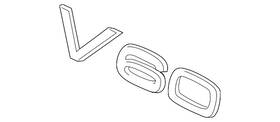
( Manufacturer Part Number: 32440056 ), ( Part Type: Emblem ), ( Genuine Oem: Yes ), ( Manufacturer Warranty: 1 Year ), ( Fitment Type: Direct Replacement ), ( Parts Included: Only Part Reference 6 On The Diagram Is Included ), ( Replaces Part Number: 31333642 )
Review VOLVO Genuine Hatch Emblem
The **Volvo 32440056 Hatch Emblem** is a meticulously crafted, high-quality emblem designed to elevate the aesthetic appeal of a Volvo vehicle, particularly models featuring a distinctive hatchback design. This emblem is engineered to exude the brand s signature blend of Scandinavian elegance and engineering precision, making it a subtle yet impactful accent for enthusiasts and owners who appreciate both form and function. Crafted from durable, premium-grade materials likely a combination of polished aluminum or stainless steel this emblem boasts a sleek, aerodynamic shape that seamlessly integrates with the vehicle s contours, ensuring a clean, refined look. The design reflects Volvo s iconic logo, featuring the brand s recognizable three-pointed star encased within a circular frame, symbolizing the company s commitment to safety, innovation, and luxury. The emblem s finish is meticulously polished to a mirror-like sheen, offering both visual brilliance and resistance to corrosion, ensuring longevity even in varying weather conditions. Whether installed on the rear hatch or another prominent location, this emblem serves as a subtle yet proud declaration of the vehicle s heritage and quality, enhancing its presence on the road while maintaining Volvo s reputation for understated sophistication. Ideal for owners seeking to preserve or restore their vehicle s original charm, this emblem is a testament to Volvo s enduring legacy of blending functionality with timeless design.
**Pros and Cons of Buying a Volvo 32440056 (Hatch Emblem Model)**
The Volvo 32440056 is a classic model from the early 1990s, specifically a **Volvo 440/480** (depending on engine size) with a hatchback body style and a distinctive "hatch emblem" badge. This car is known for its reliability, Scandinavian engineering, and timeless design, but it also comes with some limitations. Below is a detailed breakdown of its advantages and disadvantages.
---
### **Pros**
1. **Reliability and Durability**
The Volvo 440/480 series is widely regarded as one of the most durable and long-lasting models from Volvo s pre-1990s lineup. Many examples have exceeded 300,000 miles with proper maintenance. The mechanical components, including the engine, transmission, and suspension, are robust and designed to last.
2. **Strong Engine Options**
The 32440056 typically comes with one of two engines:- **2.4L B240F (160 170 hp)** A naturally aspirated inline-four with a reputation for longevity if maintained.
- **2.5L B250F (180 hp)** A slightly more powerful version with similar reliability.
Both engines are known for their smooth operation and ability to handle high mileage with regular servicing.
3. **Safety Features for Its Time**
Volvo was a pioneer in safety, and the 440/480 retains many of these features:- **Front and side impact protection** (for its era).
- **Rigid body structure** designed to absorb crash energy.
- **Standard seat belts** (though airbags were optional in early models).
While modern safety standards are far more advanced, this car was ahead of its time in crashworthiness.
4. **Comfortable Ride and Interior Quality**
The 440/480 offers a **spacious, well-built interior** with high-quality materials (for the time). The seats are supportive, and the cabin is quieter than many competitors due to Volvo s emphasis on sound insulation. The **hatchback variant** provides extra cargo space compared to sedans.
5. **Classic Scandinavian Design**
The 440/480 has a **distinctive, timeless Scandinavian aesthetic** with clean lines, a boxy yet elegant shape, and a presence that stands out. The **hatch emblem** adds a touch of rarity and collectibility, making it appealing to enthusiasts.
6. **Moderate Fuel Efficiency (for Its Class)**
While not as efficient as modern cars, the 2.4L and 2.5L engines achieve **around 18 22 MPG (city/highway)**, which is reasonable for a car from the early '90s. Diesel versions (if available) would be even more efficient.
7. **Resale Value and Collectibility**
As a **limited-production model** with a distinct badge, the 32440056 has a **niche appeal** among Volvo collectors. Well-maintained examples can hold value better than average for their class, especially if they retain original parts or have a clean history.
8. **Easy to Find Parts and Maintenance**
Volvo parts are widely available, and mechanics familiar with older Volvos are common. The **mechanical simplicity** of the 440/480 (compared to later models with more electronics) makes repairs less complex.
9. **Potential for Restoration or Customization**
If you enjoy working on cars, the 440/480 is a **great project vehicle**. It can be restored to showroom condition or modified for modern performance (e.g., turbocharging the B24/B25 engines).
10. **Low Depreciation Compared to Some Classics**
Unlike ultra-rare or high-performance cars, the 440/480 doesn t suffer from extreme depreciation. A well-kept example remains affordable while retaining some value.
---
### **Cons**
1. **Age and Wear**
Any car from the early '90s will show signs of aging, including:- **Worn suspension** (shocks, bushings, ball joints).
- **Rust** (common in older Volvos, especially in frame rails, wheel wells, and undercarriage).
- **Outdated interior materials** (vinyl, cloth, or early plastic trim that may crack or wear).
A thorough inspection is **essential** to assess rust and mechanical condition.
2. **Electrical System Reliability**
Older Volvos (pre-1990s) are notorious for **electrical gremlins**, including:- **Faulty wiring harnesses** (common in the 440/480).
- **Intermittent issues** with lights, windows, or accessories.
- **Alternator or battery problems** (especially if the car has been neglected).
A **full electrical system check** is recommended before purchase.
3. **Transmission Issues**
- **Manual transmissions** (if equipped) are generally reliable but may require **synchronizer adjustments** over time.
- **Automatic transmissions** (Aisin or ZF) can develop **slippage or rough shifting** if not maintained properly. Fluid changes are critical.
4. **Fuel System Concerns**
- **Carbureted models** (if any remain) are rare and problematic; most have **EFI (Electronic Fuel Injection)**, but injectors and sensors can fail.
- **Fuel pump reliability** varies some cars develop **hard starts or stalling** due to a failing pump.
- **Ethanol fuel compatibility** is a concern; older Volvos may not handle modern fuel blends well.
5. **Heating and Air Conditioning**
- The **heating system** can be **inefficient** in cold climates, especially if the water pump or thermostat fails.
- **AC systems** may leak refrigerant or have failing compressors, requiring costly repairs.
6. **Rust and Structural Integrity**
- Volvo s **body-on-frame design** makes rust a major concern. Check:- **Frame rails** (critical for safety).
- **Wheel wells, rocker panels, and floor pans**.
- **Hood and trunk lid** (common rust spots).
- A **lift and thorough inspection** is necessary to confirm structural soundness.
7. **High Maintenance Costs Over Time**
While parts are available, **labor costs** for older Volvos can be high, especially if you need a specialist. Common high-cost repairs include:- **Suspension rebuilds** (shocks, struts, control arms).
- **Exhaust system replacement** (rusted manifolds, pipes).
- **Transmission overhauls** (if automatic).
8. **Modern Driving Experience**
- **Poor fuel economy** compared to today s standards.
- **Sluggish acceleration** (especially the 2.4L engine).
- **Outdated ergonomics** (manual windows, non-power steering, basic climate control).
- **No modern safety features** (no ABS, traction control, or advanced airbag systems).
9. **Limited Availability of Newer Parts**
While basic parts are easy to find, **modern replacements** (e.g., sensors, injectors, or electronic components) may require sourcing from specialty suppliers.
10. **Insurance and Registration Costs**
- Older Volvos can be **more expensive to insure** than modern cars, especially if modified or used for daily driving.
- Some states or countries have **higher registration fees** for classic or high-mileage vehicles.
---
### **Conclusion**
The **Volvo 32440056 (440/480 Hatch Emblem)** is a **fantastic choice** if you:- **Value reliability, durability, and classic Scandinavian engineering**.
- **Enjoy working on or restoring a project car**.
- **Appreciate the car s unique design and collectibility**.
- **Plan to drive it occasionally** (not as a daily commuter) and are prepared for **regular maintenance**.
However, it is **not ideal** if you:- **Need a modern, efficient, or safe daily driver**.
- **Want low maintenance costs** (expect some repairs over time).
- **Are sensitive to rust or electrical issues** (requires thorough inspection).
- **Prefer a car with modern technology and comforts**.
---
### **Recommendation**
**Buy the Volvo 32440056 if:**You find a **well-documented, rust-free example** with **complete service records**.
You are prepared to **budget for maintenance** (expect $1,000 $3,000/year for upkeep).
You plan to **drive it sparingly** or use it for **weekend cruising/restoration**.
You **enjoy the classic Volvo experience** and don t mind its quirks.
**Avoid it if:**You need a **reliable, low-cost daily driver**.
The car has **visible rust, electrical issues, or a neglected history**.
You **can t commit to regular maintenance** (oil changes, fluid top-ups, rust treatment).
You **p
Details:
Electrical parts are not returnable. Shipping Carrier substitutions may be made at our determination in an attempt to reduce shipping cost the customer. Parts must be resalable and in the original packaging.
part #: 32440056 prices
- $55.18-$74.41
specifications emblico:
- for makes: Volvo
- mpn: 32440056
- part type: Emblem
- genuine oem: Yes
- manufacturer warranty: 1 Year
- fitment type: Direct Replacement
- parts included: Only Part Reference 6 On The Diagram Is Included
- replaces part number: 31333642
general emblico:
- Car Truck Parts Accessories > Exterior Parts Accessories > Emblems Ornaments
- condition: New
returns emblico:
- paid by: Seller
- time: 30 Days
- policy: Returns Accepted
payments emblico:
- wallet: Apple-pay
- credit card: Discover
- other
shipping emblico:
- service: Standard, Expedited, Overnight
- cost: $0.00
- transit: 4-9 Days
- type: Fixed
- class: Standard, Expedited, One-day
seller emblico:
- rating: 100.0%
- city: Berwyn, Pennsylvania
- # reviews: 713
offer emblico:
- sold: 0
- options: Ship-to-home
- availability: In Stock
- quantity: 2
- started: May 5, 2026
Volvo 32440056 Is Similar To:
- 1129360 Volvo Nos Trunk Or Fender Emblem Gtx Super Rare (37.8% similar) Part number is nos trunk fender emblem for a volvo TX. Can't change it. Brand new in the bag. Shipping worldwide...(March 29th, 2019)
- 1211781 Volvo Nos Gold Fender Emblem Rare Part Number (40.9% similar) Nos gold fender emblem for a 1973 or 1974 volvo 145 part number. Brand new in the bag...(December 25th, 2018)
- 1304257 Volvo Gl Emblem Fits Model Used Nice (35% similar) This emblem is approximately 3 inches long by high, made of metal and uses an adhesive mounting system, which will have to be replaced...(May 29th, 2018)
- 1321746 Volvo Metal Side Fender Trunk Lifgate Script Emblem Oem (40.8% similar) The part numbers are and 6024. This is an original volvo part. Feel free to ask any questions before purchasing. The black inlay paint is faded in places around letters. Volvo 240 side fender emblem condition: the is in fair used condition. Other information: from my research, this emblem should ...(October 26th, 2018)
- 1325249 Volvo Turbo Emblem (45.9% similar) Same emblem on the like new condition. Metal emblem. Used factory genuine volvo trunk tailgate emblem, off a turbo. One of the best condition I have ever seen...(November 10th, 2018)
- 1343663 Genuine Volvo New Wheel Center Cap (36.4% similar) More detailed information is available in the compatibility's section above. 8l year 1987 years volvo 780 l4 to ship the parts, you would get a credit of 45. Discounted shipping and combined is available on our web site. Fitment information may not be available for all products. Assuming it cost ...(April 9th, 2018)
- 1369017 Volvo Turbo Intercooler Emblem (46.6% similar) Like new condition. Same emblem on the 760 turbo. Used factory genuine volvo inter cooler trunk tailgate emblem. Metal emblem. Came off a turbo. One of the best condition I have ever seen...(November 10th, 2018)
- 30632567 30865871 30632567 Volvo Rear Emblem (38% similar) Part: 30632567 prices...(January 26th, 2018)
- 30655104 Genuine Volvo New Emblem Front (51.4% similar) For example, if your original sale total was fitment please see the compatibility's section. Fitment information may not be available for all products. Discounted shipping and combined is available on our web site. Volvo: C30 S40 S80 V50 V70 XC70 XC90 this emblem - front volvo is a brand new part ...(June 13th, 2018)
- 30764176 Volvo Trunk Lid Emblem Badge Nameplate Oem (37.2% similar) Part: 2007 -2008 prices...(September 29th, 2018)
- 30784173 Volvo Brand New Oem Rear Cylinder Emblem (40.5% similar) Manufacturer part number: identified in schematic if applicable. All of Tosca's top quality oem replacement parts are backed by a twelve 12 month 12,000 mile warranty.: brand new oem rear 8 cylinder emblem volvo S80: brand v8 that is a direct factory replacement part for the vehicles listed on ...(September 27th, 2018)